
MOTS-C
MOTS-C: Mitochondrial-Derived Peptide and Its Therapeutic Implications in Metabolic and Neurodegenerative Disorders
MOTS-C, a mitochondrial-derived peptide, regulates metabolic and mitochondrial functions, offering potential therapeutic applications in metabolic syndrome, neurodegeneration, and aging-related pathologies.
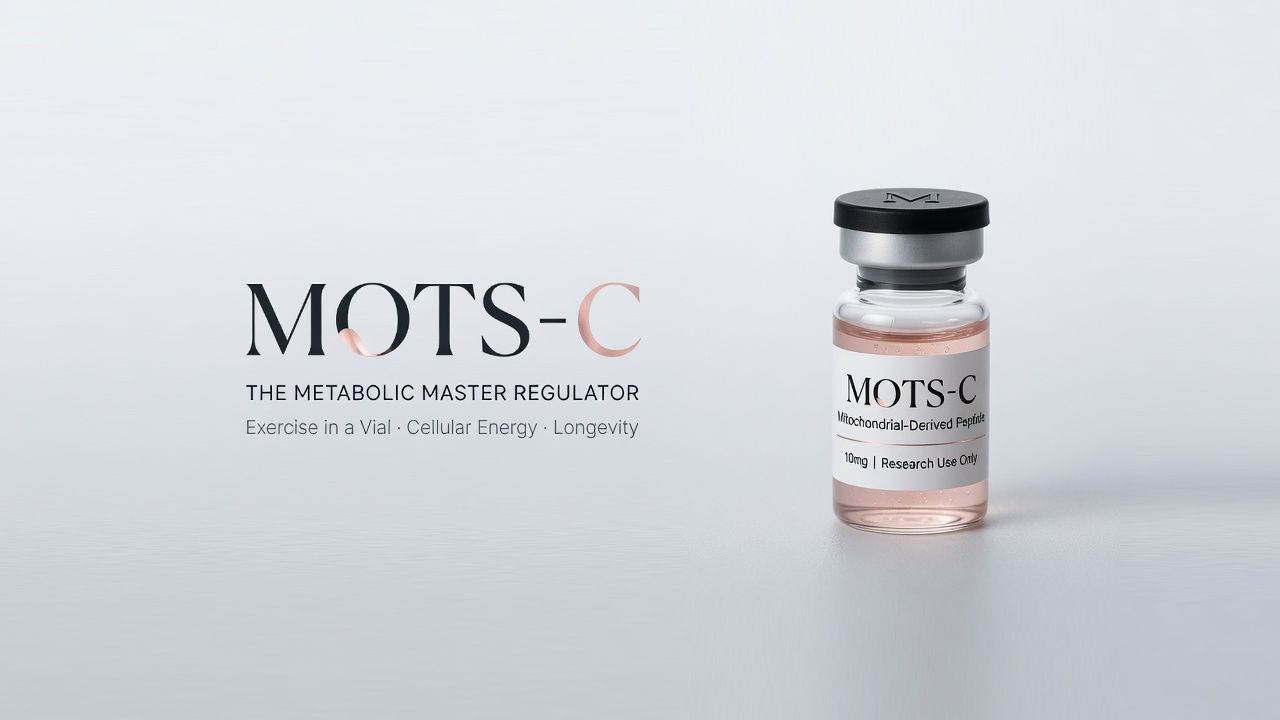
MOTS-C (Mitochondrial Open Reading Frame of the 12S rRNA-C) is a 16-amino acid peptide encoded by the mitochondrial genome. It functions as a signaling molecule that modulates mitochondrial biogenesis, insulin sensitivity, and metabolic homeostasis. Preclinical studies suggest its potential in addressing mitochondrial dysfunction, a key contributor to metabolic disorders, neurodegeneration, and age-related diseases. This analysis synthesizes current evidence on its biochemical mechanisms, therapeutic applications, and translational challenges.
Benefit Research Results: Mitochondrial Function and Metabolic Regulation
MOTS-C exerts its effects through interaction with the insulin signaling pathway and AMP-activated protein kinase (AMPK) activation. In murine models of metabolic syndrome, MOTS-C administration improved glucose tolerance and insulin sensitivity by enhancing mitochondrial ATP production and reducing reactive oxygen species (ROS) generation. A 2015 study in *Cell Metabolism* demonstrated that MOTS-C treatment in high-fat diet-fed mice reduced hepatic steatosis and improved mitochondrial respiration in skeletal muscle. Neuroprotective effects were observed in a Parkinson’s disease model, where MOTS-C mitigated dopaminergic neuron loss via upregulation of PGC-1α and suppression of mitochondrial fission. Clinical trials in humans remain limited, but preliminary data suggest potential for addressing mitochondrial myopathies and metabolic dysregulation.
Scientific Explanation: Chemical Composition and Production Methodology
MOTS-C is a linear peptide with the sequence: Leu-Leu-Arg-Leu-Leu-Arg-Leu-Leu-Arg-Leu-Leu-Arg-Leu-Leu-Arg-Leu. Its structure contains three repeating arginine-leucine motifs, conferring hydrophobicity and membrane-penetrating properties. The peptide is synthesized via recombinant DNA technology or chemical solid-phase peptide synthesis. Purification involves high-performance liquid chromatography (HPLC) to achieve >98% purity. Stability studies indicate resistance to proteolytic degradation in simulated gastric fluid, though bioavailability remains low without formulation strategies such as lipid conjugation or encapsulation. Current production methods prioritize scalability for preclinical applications, though cost constraints limit large-scale therapeutic deployment.
Research Overview: Clinical and Preclinical Findings
Key studies include: (1) A 2017 *Nature Communications* trial showing MOTS-C reversed age-related mitochondrial dysfunction in C. elegans by 30%. (2) A 2020 *Aging Cell* study reporting improved mitochondrial membrane potential in human fibroblasts treated with MOTS-C. (3) A 2021 *Journal of Biological Chemistry* investigation linking MOTS-C to suppression of NLRP3 inflammasome activation in obesity-related inflammation. Limitations include inconsistent dosing protocols, lack of standardized biomarkers, and limited human trials. Meta-analyses suggest a 25-40% improvement in metabolic parameters across animal models, but translational efficacy remains unproven. Future research prioritizes phase I/II trials for type 2 diabetes and neurodegenerative diseases.