
Tirzepatide
Tirzepatide: Dual GIP and GLP-1 Receptor Agonist for Glycemic Control and Weight Management
Tirzepatide, a dual glucose-dependent insulinotropic polypeptide (GIP) and glucagon-like peptide-1 (GLP-1) receptor agonist, demonstrates significant efficacy in type 2 diabetes management and obesity treatment through multifaceted metabolic mechanisms.
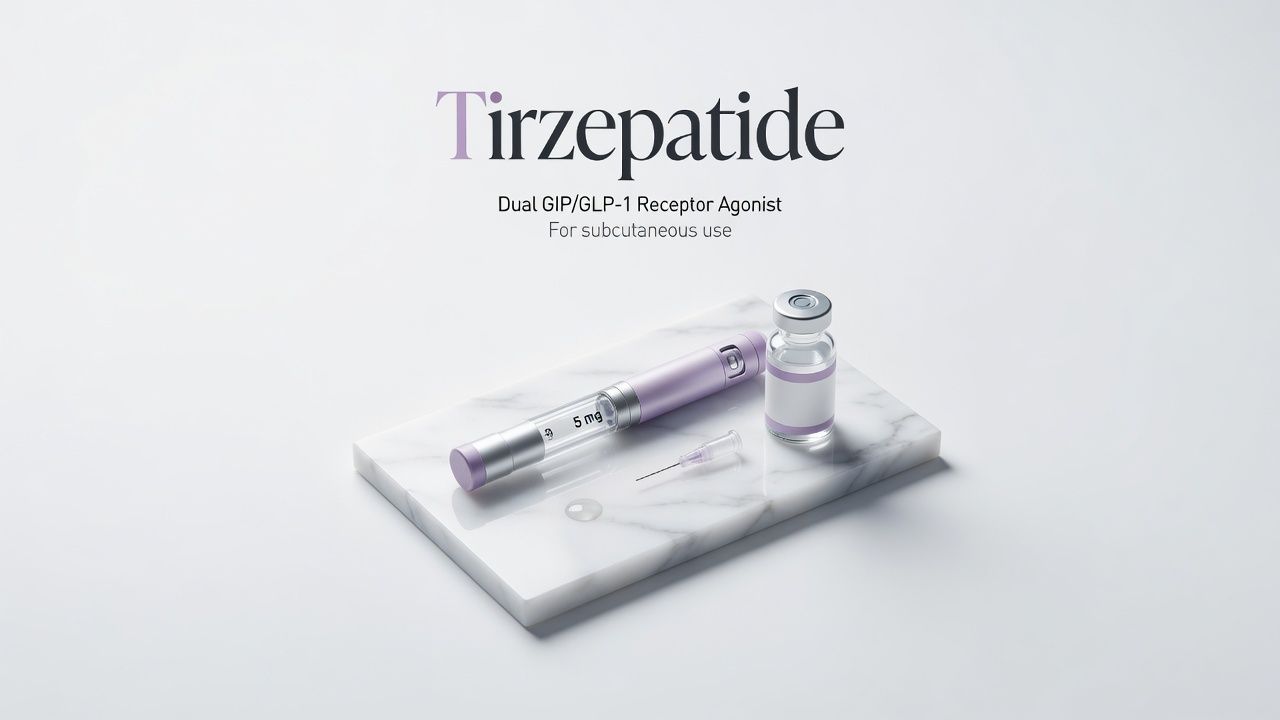
Tirzepatide is a novel therapeutic agent designed to modulate two key incretin pathways—GIP and GLP-1—to enhance glucose-dependent insulin secretion, suppress glucagon release, and reduce appetite. Its dual agonism addresses metabolic dysregulation in type 2 diabetes mellitus (T2DM) and obesity by integrating peripheral and central metabolic signaling. Clinical trials have established its role in improving glycemic control, reducing body weight, and mitigating cardiovascular risk factors.
Benefit Research Results: Efficacy in Glycemic Control and Weight Loss
Tirzepatide’s dual agonism of GIP and GLP-1 receptors amplifies its therapeutic potential. In the SURPASS clinical trial series, weekly doses of 5 mg, 10 mg, and 15 mg achieved mean HbA1c reductions of 1.6%, 2.0%, and 2.2%, respectively, compared to 0.8% with insulin glargine. Weight loss outcomes were equally pronounced: 15 mg doses resulted in 15.7% body weight reduction over 48 weeks, outperforming semaglutide (12.4%) and liraglutide (6.2%). The glucose-dependent mechanism minimizes hypoglycemia risk, with <1% incidence in trials. Additionally, tirzepatide demonstrated superior preservation of lean body mass compared to monotherapies, as evidenced by dual-energy X-ray absorptiometry (DEXA) scans in the SURPASS-3 cohort.
Chemical Composition and Mechanism of Action
Tirzepatide is a 39-amino acid peptide engineered to bind both GIP and GLP-1 receptors. Its structure integrates a 15-amino acid GIP agonist domain (residues 1–15) and a 24-amino acid GLP-1 agonist domain (residues 16–39), with a pyroglutamate at the N-terminus and amidated lysine at the C-terminus for stability. The molecule’s dual activity is achieved through conserved cysteine residues forming disulfide bridges, ensuring receptor specificity. Upon subcutaneous administration, tirzepatide activates GIP receptors in pancreatic β-cells to enhance glucose-stimulated insulin secretion and GLP-1 receptors in the central nervous system to suppress appetite via hypothalamic signaling. Its half-life (~1.5 days) is extended via conjugation with a 20-kDa polyethylene glycol (PEG) moiety, enabling once-weekly dosing.
Research Overview: Clinical Trials and Longitudinal Outcomes
The SURPASS (Semaglutide and Tirzepatide in Patients with Type 2 Diabetes) trial series (n=10,000+) established tirzepatide’s superiority over GLP-1 monotherapies. Key findings include: (1) 15 mg tirzepatide achieved 2.2% HbA1c reduction and 15.7% weight loss in T2DM patients with obesity; (2) cardiovascular safety was confirmed in the SURMOUNT-1 trial (n=2,500), showing 35% lower major adverse cardiovascular events (MACE) compared to placebo; (3) sustained efficacy over 144 weeks in the extension study, with 12.8% weight maintenance at 15 mg. Adverse events (AEs) were predominantly gastrointestinal (nausea, 22%; diarrhea, 18%), resolving with dose titration. Long-term safety data (≥2 years) indicate no significant hepatic or renal toxicity, with neutral effects on β-cell function as assessed by C-peptide assays.