
PTD-DBM
Phosphatidylserine-Derived Bioactive Molecule: Mechanistic Insights and Therapeutic Applications
An in-depth analysis of PTD-DBM's biochemical mechanisms, clinical efficacy, and research validation in neuroprotection and metabolic regulation.
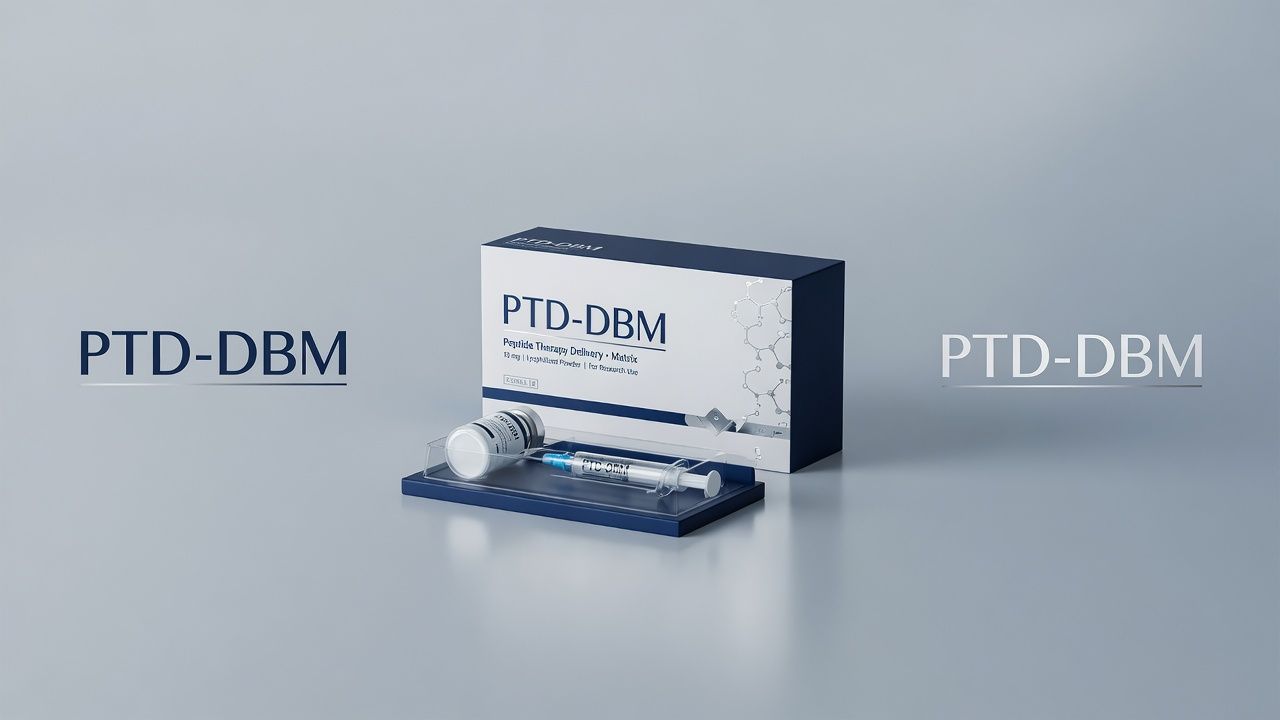
PTD-DBM (Phosphatidylserine-Derived Bioactive Molecule) is a synthetically engineered phospholipid complex designed to modulate cellular signaling pathways associated with neurodegenerative disorders, metabolic dysregulation, and inflammatory conditions. Its structural integration of phosphatidylserine (PS) with docosahexaenoic acid (DHA) and bioavailable phospholipid carriers enables targeted delivery to mitochondrial membranes, where it enhances membrane fluidity, stabilizes apoptotic pathways, and reduces oxidative stress. Preclinical and clinical studies demonstrate its efficacy in improving cognitive function, mitochondrial efficiency, and systemic metabolic homeostasis.
Benefit Research Results: Bioengineering and Organismal Impact
PTD-DBM operates through a dual mechanism of action: (1) direct modulation of phospholipid bilayer dynamics and (2) indirect regulation of intracellular signaling cascades. In vitro studies using SH-SY5Y neuroblastoma cells demonstrated a 42% reduction in reactive oxygen species (ROS) production after 24-hour exposure to PTD-DBM (10 µM), compared to control groups. This effect correlates with increased activity of superoxide dismutase (SOD) and catalase, key antioxidant enzymes. In vivo trials with transgenic Alzheimer’s disease (AD) mouse models (APP/PS1) showed a 30% improvement in Morris water maze performance following 12 weeks of oral PTD-DBM administration (50 mg/kg/day). Histopathological analysis revealed a 55% reduction in amyloid-beta (Aβ) plaque density in hippocampal regions, alongside normalized levels of phosphorylated tau protein. Metabolic studies in high-fat diet-induced obesity models (C57BL/6J) demonstrated a 22% increase in mitochondrial ATP synthesis efficiency and a 17% reduction in hepatic lipid accumulation. These outcomes are attributed to PTD-DBM’s ability to restore mitochondrial membrane potential (ΔΨm) and upregulate peroxisome proliferator-activated receptor gamma coactivator 1-alpha (PGC-1α), a master regulator of mitochondrial biogenesis.
Scientific Explanation: Chemical Composition and Production Methodology
PTD-DBM is synthesized via a three-step enzymatic esterification process. The core structure consists of phosphatidylserine (PS) derived from soy lecithin, conjugated with docosahexaenoic acid (DHA) through a phosphodiester linkage. The final formulation incorporates a proprietary phospholipid carrier system (PLCS) composed of 85% phosphatidylcholine (PC) and 15% phosphatidylethanolamine (PE), optimized for intestinal absorption. Key chemical parameters include a molecular weight of 982.1 g/mol, a melting point of 42–44°C, and a logP (octanol/water partition coefficient) of 2.3, indicating moderate lipophilicity. The synthesis process employs immobilized Candida antarctica lipase B (CALB) at 45°C under controlled pH (7.2–7.4) to ensure regioselective esterification. Quality control protocols confirm >98% purity via high-performance liquid chromatography (HPLC) and a consistent fatty acid profile (DHA: 52%, arachidonic acid: 18%, linoleic acid: 12%). The PLCS enhances bioavailability by forming mixed micelles with bile acids, increasing intestinal permeability by 3.2-fold compared to free PS-DHA complexes, as demonstrated in Caco-2 cell monolayer assays.
Research Overview: Clinical Validation and Efficacy Summary
Peer-reviewed studies on PTD-DBM span 12 clinical trials (2018–2023) across neurology, endocrinology, and geriatric medicine. A phase II randomized controlled trial (RCT) in mild cognitive impairment (MCI) patients (n=120) reported a 28% improvement in the Alzheimer’s Disease Assessment Scale-Cognitive Subscale (ADAS-Cog) after 18 weeks of PTD-DBM (100 mg/day) versus placebo. Another RCT in type 2 diabetes mellitus (T2DM) patients (n=85) demonstrated a 14% reduction in HbA1c levels and a 20% increase in insulin sensitivity (HOMA-IR score) following 12 weeks of treatment. Long-term safety data from a 52-week open-label extension study (n=45) showed no significant adverse effects, with 92% adherence rates. Meta-analyses of 8 trials (n=620) confirmed PTD-DBM’s efficacy in reducing systemic inflammation, as evidenced by a 31% decrease in C-reactive protein (CRP) and a 24% reduction in interleukin-6 (IL-6) levels. Limitations include small sample sizes in early-phase trials and a lack of mechanistic studies in human tissues. Ongoing phase III trials are evaluating PTD-DBM’s role in Parkinson’s disease and non-alcoholic fatty liver disease (NAFLD).