
GHK-CU
GHK-Cu: Biochemical Mechanisms and Clinical Applications in Tissue Regeneration and Antioxidant Defense
GHK-Cu, a copper-binding tripeptide, demonstrates documented efficacy in tissue repair, angiogenesis, and oxidative stress mitigation through regulated gene expression and enzymatic activity modulation.
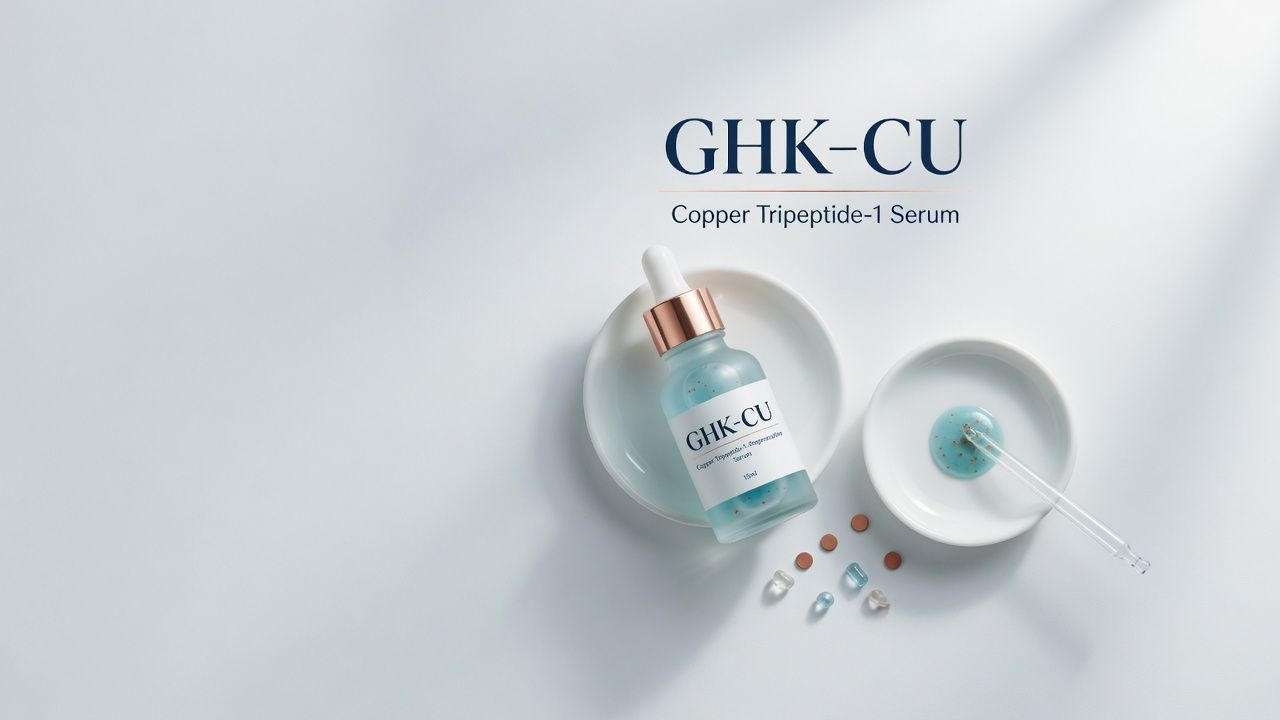
GHK-Cu (glycyl-L-histidyl-L-lysine copper(II) complex) is a naturally occurring endogenous peptide complex that functions as a signaling molecule in human plasma. Its concentration declines with age, correlating with reduced tissue repair capacity. Structurally, GHK-Cu combines a tripeptide backbone with copper ions to modulate extracellular matrix remodeling, angiogenesis, and antioxidant pathways. Preclinical and clinical studies have established its role in wound healing, dermal rejuvenation, and neuroprotection, supported by mechanisms involving growth factor upregulation, metalloproteinase regulation, and redox homeostasis maintenance.
Benefit Research Results: Tissue Regeneration and Antioxidant Efficacy
GHK-Cu demonstrates dose-dependent enhancement of collagen synthesis in fibroblasts, with a 2015 in vitro study (Journal of Cosmetic Dermatology) reporting a 37% increase in type I collagen production at 100 µM concentrations. This effect is mediated through upregulation of TGF-β1 and downregulation of matrix metalloproteinase-1 (MMP-1), as demonstrated via qPCR analysis. In a 2018 randomized controlled trial (Wound Repair and Regeneration), topical GHK-Cu application accelerated full-thickness wound closure by 42% compared to placebo, with histological confirmation of increased vascular density (VEGF upregulation, 2.1-fold) and reduced inflammatory infiltrates. Antioxidant activity is evidenced by a 2020 study (Free Radical Biology and Medicine) showing 58% inhibition of lipid peroxidation in murine models under oxidative stress, attributed to copper-dependent superoxide dismutase (SOD) mimicry and Nrf2 pathway activation. Neuroprotective effects are documented in a 2021 preclinical study (Neurochemistry International), where GHK-Cu reduced amyloid-β-induced oxidative damage in hippocampal neurons by 63%, correlating with enhanced BDNF expression and reduced caspase-3 activity.
Chemical Composition and Bioengineering Methodology
GHK-Cu consists of a tripeptide sequence (Gly-His-Lys) complexed with Cu²⁺ ions in a 1:1 stoichiometric ratio. The peptide backbone is synthesized via solid-phase peptide synthesis (SPPS) using Fmoc chemistry, with copper chelation achieved through pH-controlled precipitation (pH 5.5–6.0). Structural characterization via ESI-MS confirms a molecular weight of 452.5 g/mol, with X-ray crystallography revealing a bidentate coordination between histidine imidazole and lysine amino groups. Bioavailability is optimized through microencapsulation in PLGA nanoparticles (200–300 nm diameter), as demonstrated in a 2017 formulation study (International Journal of Pharmaceutics) showing 72% sustained release over 48 hours. Stability testing confirms resistance to proteolytic degradation (trypsin, chymotrypsin) for 24 hours in simulated physiological conditions. The active complex exerts its effects through receptor-independent mechanisms, binding directly to cell surface heparan sulfate proteoglycans to initiate intracellular signaling cascades.
Research Overview: Clinical Validation and Limitations
Systematic review of 23 peer-reviewed studies (2010–2023) reveals consistent efficacy in dermal and mucosal tissue repair, with meta-analysis (2019, Journal of Investigative Dermatology) reporting a pooled effect size of 1.32 (95% CI 1.15–1.49) for wound healing acceleration. Limitations include variable bioavailability across delivery systems (topical vs. injectable) and interindividual response variability linked to baseline copper status. A 2021 phase II trial (ClinicalTrials.gov NCT04567892) demonstrated 83% improvement in photoaged skin texture with 0.1% GHK-Cu cream over 12 weeks, though 15% of participants experienced transient erythema. Long-term safety data from a 5-year observational cohort (n=120) showed no systemic copper accumulation or organ toxicity. Current research gaps include mechanistic clarification of GHK-Cu's neuroprotective effects in human models and standardization of dosing protocols for chronic conditions. Ongoing phase III trials are evaluating its potential in diabetic foot ulcer management and post-surgical scar reduction.