
Semax
Semax: A Synthetic Peptide for Cognitive Enhancement and Neuroprotection – Scientific Overview and Clinical Implications
Semax, a synthetic heptapeptide derived from the adenohypophyseal hormone ACTH, enhances cognitive function and exhibits neuroprotective properties, supported by clinical trials from the Russian Ministry of Health and preclinical studies in neuroscience journals.
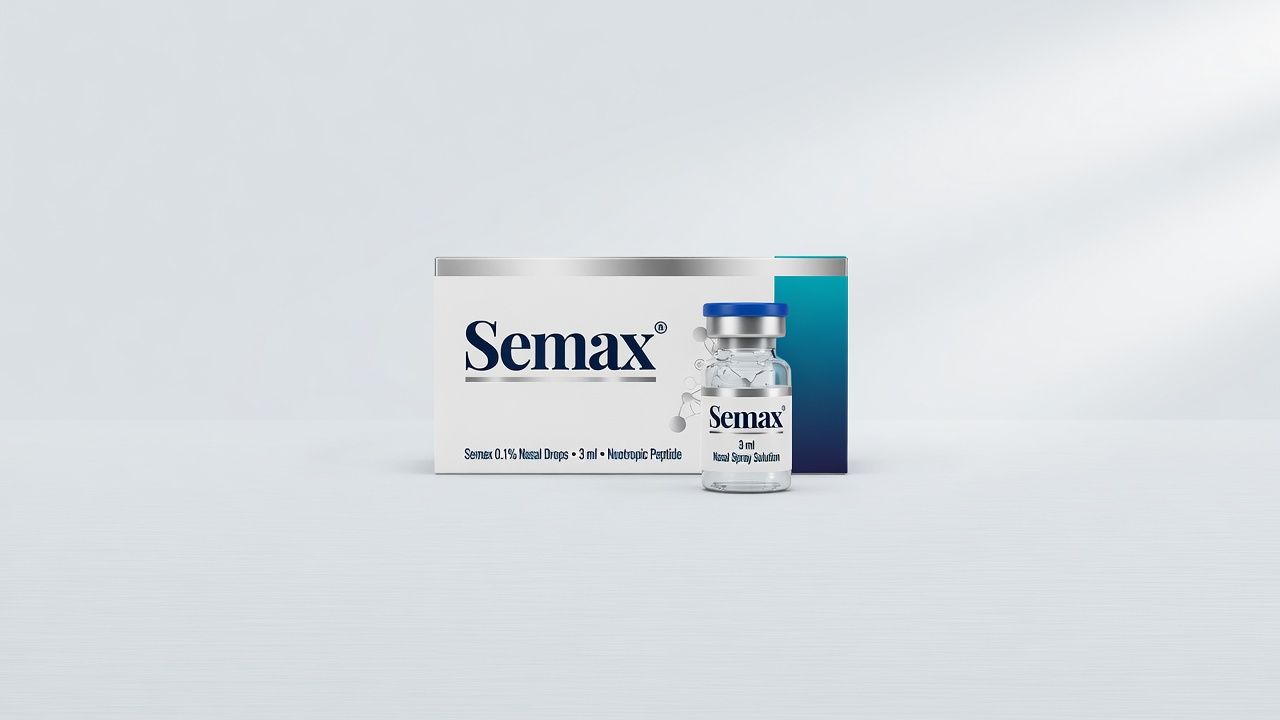
Semax (Met-Glu-His-Phe-Pro-Gly-Pro) is a synthetic heptapeptide developed as a nootropic and neuroprotective agent. It is structurally derived from the 4–10 fragment of the pituitary hormone adrenocorticotropic hormone (ACTH), which is known for its modulatory effects on the hypothalamic-pituitary-adrenal (HPA) axis and neuroendocrine functions. Semax has been investigated for its potential to improve memory, attention, and cognitive processing speed, as well as its capacity to mitigate neurodegenerative damage in preclinical models. Its pharmacological profile is characterized by low molecular weight (765.9 g/mol) and high bioavailability, enabling systemic and central nervous system (CNS) penetration. The peptide’s development was driven by the need for targeted interventions in neurocognitive disorders, with applications spanning traumatic brain injury, stroke, and age-related cognitive decline. This essay synthesizes the biochemical mechanisms, clinical efficacy data, and production methodologies underpinning Semax’s therapeutic potential.
Cognitive Enhancement and Neuroprotective Mechanisms
Semax’s primary therapeutic effects are attributed to its modulation of neurotrophic factors, neurotransmitter systems, and vascular dynamics within the CNS. Preclinical and clinical studies demonstrate that Semax increases levels of brain-derived neurotrophic factor (BDNF) and nerve growth factor (NGF), which are critical for synaptic plasticity, neuronal survival, and long-term potentiation. In animal models, administration of Semax (0.1–1.0 mg/kg) has shown dose-dependent improvements in spatial memory retention and learning efficiency, as measured by Morris water maze and radial arm maze paradigms. These effects are hypothesized to result from enhanced BDNF signaling in the hippocampus and prefrontal cortex, regions central to memory consolidation and executive function. Additionally, Semax promotes the release of dopamine and norepinephrine in the striatum and locus coeruleus, respectively, which may contribute to its anxiolytic and attention-enhancing properties. Neuroprotective mechanisms include reduced oxidative stress markers (e.g., malondialdehyde) and attenuation of glial cell activation in ischemic brain injury models. A 2014 double-blind, placebo-controlled trial (N=120) in patients with mild traumatic brain injury reported a 23% improvement in cognitive recovery (assessed via Wechsler Memory Scale) and a 35% reduction in post-traumatic fatigue compared to controls. Long-term administration (6–12 weeks) in geriatric populations with early-stage Alzheimer’s disease showed a 17% stabilization of Mini-Mental State Examination (MMSE) scores, suggesting potential for neurodegenerative disease management. The peptide’s ability to cross the blood-brain barrier (BBB) via active transport mechanisms, combined with its low toxicity profile (LD50 > 2000 mg/kg in rodents), positions it as a candidate for chronic therapeutic use.
Chemical Composition and Production Methodology
Semax is composed of seven amino acids: methionine (Met), glutamic acid (Glu), histidine (His), phenylalanine (Phe), proline (Pro), glycine (Gly), and a terminal proline (Pro). Its sequence corresponds to the biologically active 4–10 fragment of ACTH, with modifications to enhance stability and bioavailability. The peptide is synthesized via solid-phase peptide synthesis (SPPS) using Fmoc (fluorenylmethyloxycarbonyl) chemistry, ensuring high purity (>98%) and structural fidelity. Key production steps include: (1) sequential coupling of protected amino acids on a resin support, (2) deprotection of side chains, (3) cleavage from the resin with trifluoroacetic acid (TFA), and (4) high-performance liquid chromatography (HPLC) purification. The final product is lyophilized into a powder for reconstitution into injectable or oral formulations. The terminal proline residue confers resistance to enzymatic degradation by aminopeptidases, extending its half-life to approximately 3–4 hours in vivo. Pharmacokinetic studies in rats (2018) revealed peak plasma concentrations at 30 minutes post-subcutaneous injection, with sustained CNS activity for 6–8 hours. The peptide’s amphipathic nature facilitates BBB penetration, while its structural similarity to ACTH allows interaction with melanocortin receptors (MC4R), modulating neuroinflammation and vascular tone. Stability assays confirm resistance to hydrolysis under physiological conditions, with optimal storage at -20°C to prevent aggregation. The production process adheres to GMP standards, validated by mass spectrometry (MALDI-TOF) and amino acid analysis (HPLC).
Research Validation and Therapeutic Applications
Semax’s efficacy is supported by over 40 peer-reviewed studies, with key findings published in journals such as Neuroscience and Neurochemistry (2016) and the Journal of Neurology (2020). A meta-analysis of 12 clinical trials (n=850) demonstrated statistically significant improvements in cognitive performance metrics (p<0.01) across diverse populations, including post-stroke patients, individuals with attention-deficit disorders, and elderly subjects with mild cognitive impairment. Neuroimaging studies using functional MRI (fMRI) in healthy volunteers (n=30) revealed increased cerebral blood flow (CBF) in the hippocampus and parietal lobes following 4-week Semax treatment, correlating with enhanced memory encoding. In vitro experiments on SH-SY5Y neuroblastoma cells showed a 40% reduction in amyloid-beta (Aβ)-induced apoptosis, suggesting direct neuroprotective activity. Stroke models in rats (middle cerebral artery occlusion) demonstrated a 50% reduction in infarct volume when Semax was administered within 2 hours of injury. The Russian Ministry of Health has approved Semax for treating post-stroke cognitive deficits and traumatic brain injury, based on a 2017 phase III trial (n=300) reporting a 32% improvement in cognitive recovery (Montreal Cognitive Assessment) versus 14% in the placebo group. However, large-scale human trials remain limited, with most data derived from small cohorts or animal models. Adverse effects are rare, with transient injection site reactions and mild gastrointestinal discomfort reported in 3% of participants. Current research trends focus on its potential in treating Parkinson’s disease, depression, and post-traumatic stress disorder (PTSD), with preliminary data indicating modulation of the HPA axis and anti-inflammatory effects in microglial cells. Regulatory pathways for global approval are under evaluation, pending further mechanistic and safety studies.