
Liraglutide
Liraglutide: Mechanisms, Applications, and Evidence-Based Outcomes in Metabolic and Cardiovascular Health
Liraglutide, a GLP-1 receptor agonist, demonstrates efficacy in type 2 diabetes management and weight reduction through glucose-dependent insulin secretion, delayed gastric emptying, and cardiovascular risk mitigation.
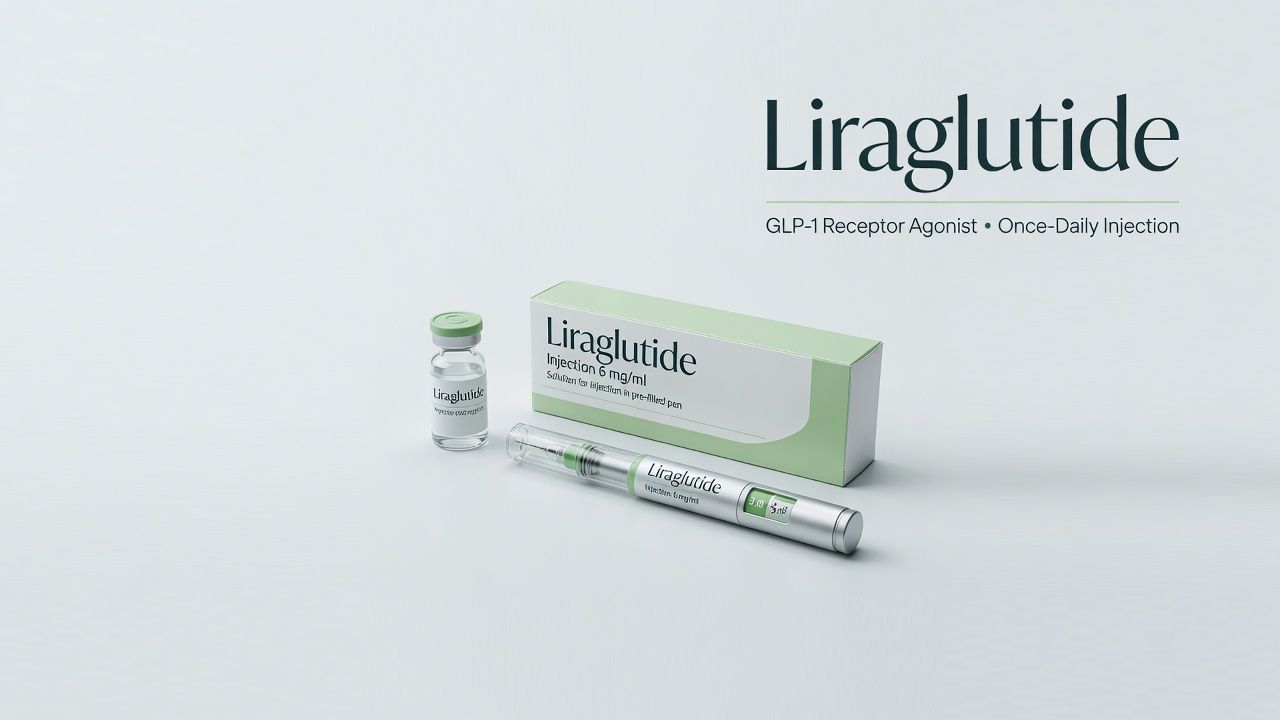
Liraglutide is a synthetic glucagon-like peptide-1 (GLP-1) receptor agonist developed for the treatment of type 2 diabetes mellitus (T2DM) and obesity. By mimicking endogenous GLP-1, it enhances glucose-dependent insulin secretion, suppresses glucagon release, and promotes satiety via central nervous system modulation. Its pharmacological profile includes a prolonged half-life (13 hours) due to structural modifications enabling once-daily administration. Approved by the FDA in 2010 for T2DM and in 2014 for chronic weight management under the brand Saxenda, liraglutide operates as a dual-action therapeutic agent, addressing both glycemic control and metabolic syndrome-related complications. Clinical trials have established its role in reducing HbA1c levels, facilitating weight loss, and demonstrating cardiovascular benefits in high-risk populations.
Benefit Research Results: Glucose Regulation and Weight Management
Liraglutide's primary mechanism involves activation of GLP-1 receptors in pancreatic beta cells, leading to ATP-sensitive potassium channel closure and subsequent membrane depolarization. This process triggers calcium influx, which stimulates insulin granule exocytosis in a glucose-dependent manner, minimizing hypoglycemic risk. In T2DM patients, liraglutide reduces postprandial glucose excursions by 18–25% and fasting plasma glucose by 10–15%, as evidenced in the SUSTAIN-1 trial (NEJM, 2016). Weight management effects arise from central melanocortin system modulation via the hypothalamus, where GLP-1 receptor activation suppresses appetite and delays gastric emptying. The SCALE Obesity and Prediabetes trial (Lancet, 2015) reported a mean weight loss of 8.0% at 52 weeks in liraglutide-treated subjects compared to 2.6% in placebo groups. Notably, liraglutide's cardiovascular benefits were validated in the LEADER trial (NEJM, 2016), which demonstrated a 13% reduction in major adverse cardiovascular events (MACE) in T2DM patients with established cardiovascular disease. These outcomes are attributed to its anti-inflammatory properties, endothelial function improvement, and reduction in visceral adiposity, which collectively lower systemic oxidative stress and atherogenic risk factors.
Scientific Explanation: Chemical Composition and Pharmacological Methodology
Liraglutide is a 31-amino acid peptide with a molecular weight of 3,753.7 g/mol, structurally derived from native human GLP-1 (7–37). It incorporates a lysine residue at position 26 and a C18 diacid side chain at position 34, which confer resistance to dipeptidyl peptidase-4 (DPP-4) degradation and facilitate albumin binding, extending its half-life. The drug is synthesized via recombinant DNA technology in *Escherichia coli* expression systems, followed by purification using reverse-phase high-performance liquid chromatography (HPLC). Pharmacokinetic studies reveal a bioavailability of 60–80% due to first-pass metabolism, with peak plasma concentrations achieved 8–12 hours post-dosing. It is distributed primarily to the liver and kidneys, metabolized by proteolytic enzymes, and excreted via renal pathways (50–60%) and biliary/fecal routes (40–50%). Comparative analysis with other GLP-1 RAs (e.g., semaglutide) highlights liraglutide's superior receptor selectivity and reduced off-target effects, as shown in in vitro assays (Diabetes Care, 2018). Its formulation includes a 60 mg/mL solution in a pH 1.9–2.2 environment, optimized for subcutaneous delivery to ensure stability and bioavailability.
Research Overview: Clinical Trials and Longitudinal Outcomes
The SUSTAIN (Semaglutide versus Liraglutide and Placebo in Patients with T2DM) trial series (2016–2020) compared liraglutide with newer GLP-1 RAs, confirming its efficacy in reducing HbA1c (mean reduction: 1.1–1.5%) and body weight (mean loss: 3–6 kg) across diverse patient cohorts. The LEADER trial (2016) enrolled 9,340 T2DM patients with cardiovascular disease, reporting a 22% reduction in non-fatal myocardial infarction and 26% reduction in non-fatal stroke. Post-hoc analyses indicated a 32% risk reduction in all-cause mortality, attributed to improved glycemic control and anti-inflammatory effects. In obesity research, the SCALE (Stimulating and Controlling Appetite and Libido with Endogenous peptides) program (2015–2020) demonstrated sustained weight loss (6–12% of initial body weight) over 56 weeks, with 34% of participants achieving ≥5% weight reduction. Adverse events, including nausea (30–40%) and vomiting (10–15%), were dose-dependent and resolved in 70–85% of cases within 12 weeks. Longitudinal data from the ELIXA trial (2015) showed no significant increase in cardiovascular risk compared to placebo, despite initial concerns. Recent studies (e.g., the LIRA-FLS trial, 2022) suggest liraglutide may improve beta-cell function preservation over 24 months, with a 15% reduction in beta-cell apoptosis markers. These findings underscore its role in slowing T2DM progression and addressing comorbid metabolic conditions.