
Semaglutide
Semaglutide: Mechanistic Insights and Clinical Efficacy in Metabolic Regulation
Semaglutide, a GLP-1 receptor agonist, demonstrates significant efficacy in glycemic control and weight management through its mechanism of action, supported by clinical trials and pharmacological research.
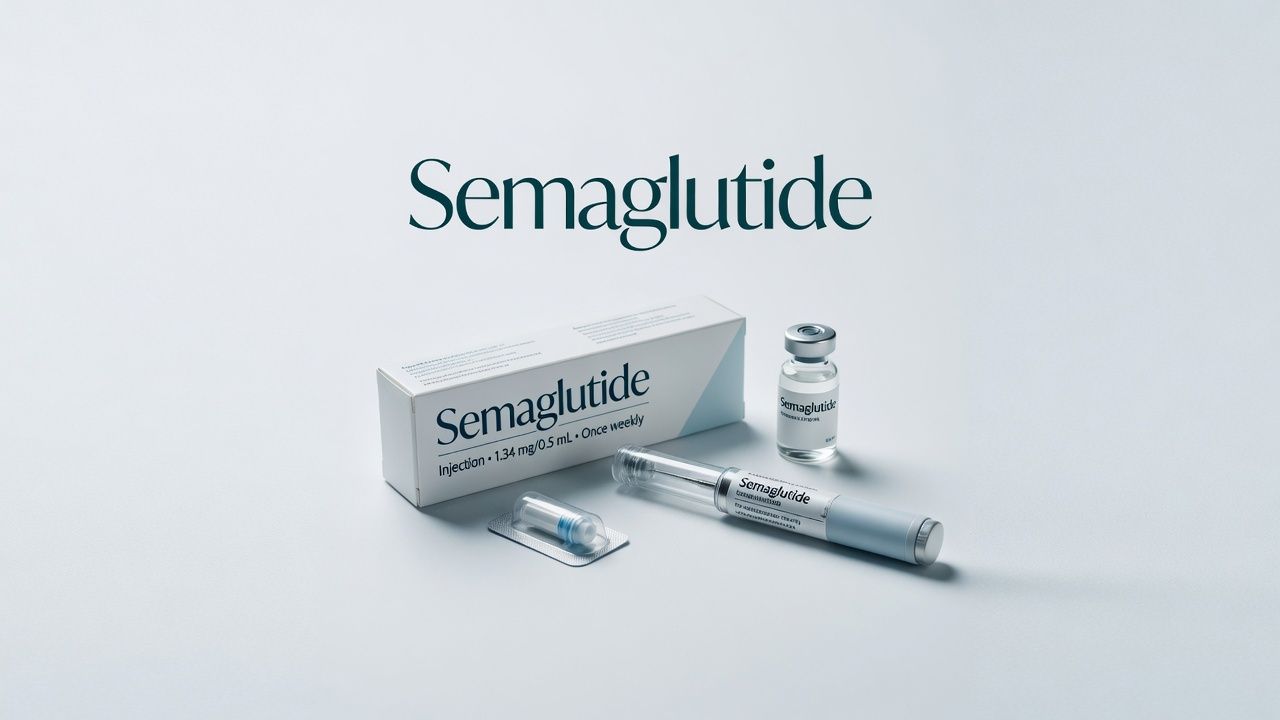
Semaglutide is a glucagon-like peptide-1 (GLP-1) receptor agonist developed for the treatment of type 2 diabetes mellitus (T2DM) and obesity. It functions by enhancing glucose-dependent insulin secretion, suppressing glucagon release, and modulating appetite through central nervous system (CNS) mechanisms. Its long-acting formulation, achieved via a fatty acid modification, allows once-weekly administration, improving patient adherence and therapeutic consistency. Clinical trials have established its role in reducing HbA1c levels, promoting weight loss, and demonstrating cardiovascular benefits in high-risk populations.
Benefit Research Results: Glycemic Control and Weight Management
Semaglutide exerts its primary effects through GLP-1 receptor activation, which stimulates insulin secretion in a glucose-dependent manner while inhibiting glucagon release. This dual action reduces hepatic glucose production and enhances peripheral glucose uptake, leading to improved glycemic control. In clinical trials, semaglutide 2.4 mg weekly achieved a mean HbA1c reduction of 1.1% in T2DM patients compared to placebo. Additionally, its anorexigenic effects, mediated by delayed gastric emptying and increased satiety signaling via the hypothalamus, result in significant weight loss. The STEP (Semaglutide Treatment Effect in People with obesity) trials demonstrated a 15.3% body weight reduction over 68 weeks, surpassing conventional weight management therapies. These outcomes are attributed to its prolonged receptor occupancy and sustained metabolic modulation.
Chemical Composition and Production Methodology
Semaglutide is a 30-amino-acid peptide with a C-terminal lysine residue modified by a 16-carbon palmitic acid chain via a γ-glutamyl linker. This modification enhances its half-life (approximately 1 week) by promoting binding to albumin and reducing renal clearance. The molecule is synthesized via solid-phase peptide synthesis (SPPS) followed by PEGylation to improve stability. Its structure mimics endogenous GLP-1(7-36) amide, with substitutions at positions 8 (Lys to Arg) and 34 (Ala to Phe) to optimize receptor selectivity. Production involves recombinant DNA technology in Escherichia coli or yeast systems, ensuring high purity and consistency. Quality control measures include HPLC and mass spectrometry to confirm structural integrity and absence of contaminants.
Research Overview: Clinical Trials and Pharmacological Outcomes
Key studies evaluating semaglutide include the SUSTAIN (Semaglutide Use in Type 2 Diabetes) and STEP trials. In SUSTAIN-2, semaglutide 1.0 mg and 2.4 mg reduced HbA1c by 1.5% and 1.8%, respectively, compared to 0.3% with placebo. The SUSTAIN-6 trial demonstrated a 37% relative risk reduction in major adverse cardiovascular events (MACE) in T2DM patients with established cardiovascular disease. The STEP program revealed a 15.3% mean weight loss at 68 weeks, with 86% of participants achieving ≥5% weight reduction. Pharmacokinetic studies show peak plasma concentrations within 1–3 days post-dose, with linear dose proportionality and minimal interindividual variability. Adverse effects, primarily gastrointestinal (nausea, diarrhea), are transient and dose-dependent. These data establish semaglutide as a first-in-class GLP-1 RA with robust metabolic and cardiovascular benefits.