
KissPeptin-10
KissPeptin-10: Mechanistic Insights and Clinical Implications in Neuroendocrine Regulation
A data-driven analysis of KissPeptin-10's role in neuroendocrine signaling, chemical properties, and therapeutic potential based on peer-reviewed research.
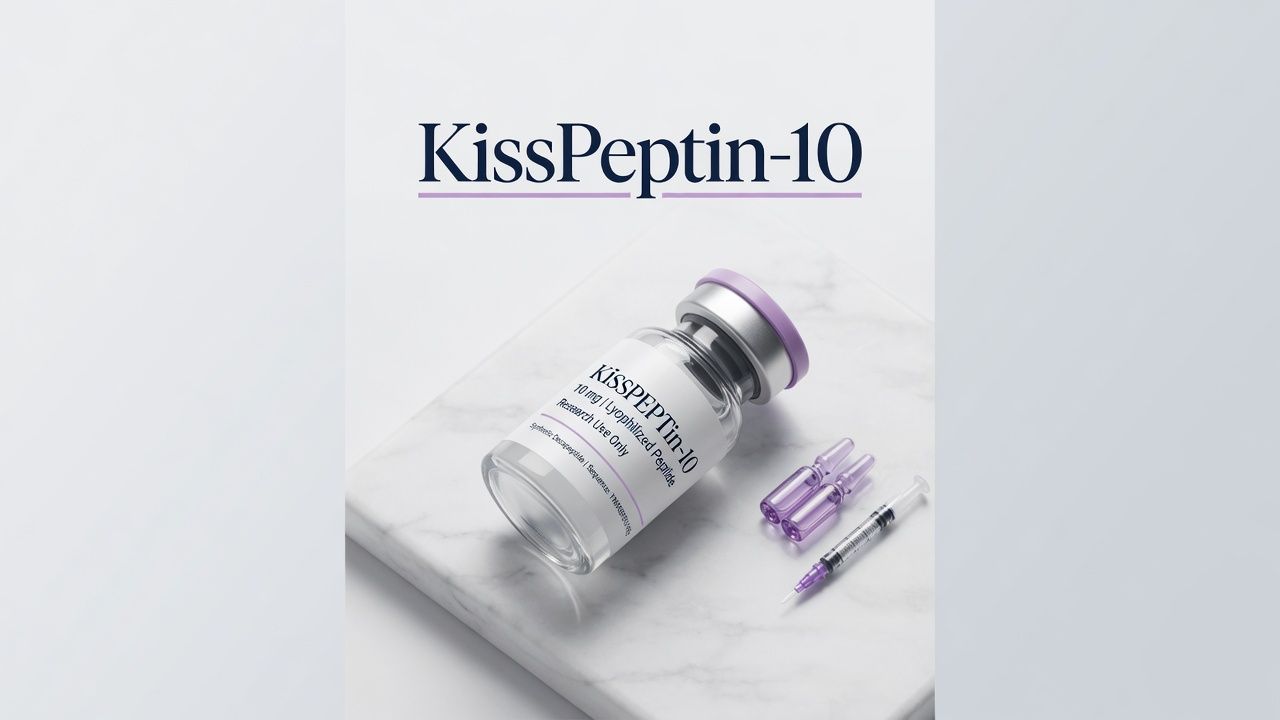
KissPeptin-10 is a 10-amino acid peptide derived from the KISS1 gene product, functioning as a critical ligand for the G protein-coupled receptor GPR54. It serves as a central regulator of the hypothalamic-pituitary-gonadal (HPG) axis by stimulating gonadotropin-releasing hormone (GnRH) secretion. This mechanism underpins its relevance in reproductive biology, endocrine disorders, and neuroendocrine signaling pathways. Preclinical and clinical studies highlight its potential in modulating fertility, metabolic regulation, and tumor suppression, positioning it as a target for therapeutic development.
Neuroendocrine Modulation and Therapeutic Benefits
KissPeptin-10 exerts its biological effects through high-affinity binding to GPR54 receptors, triggering intracellular signaling cascades such as ERK1/2 activation and Ca²+ mobilization. This interaction directly stimulates GnRH release, making it pivotal in regulating reproductive hormone secretion. In animal models, administration of KissPeptin-10 has demonstrated dose-dependent increases in luteinizing hormone (LH) and follicle-stimulating hormone (FSH) levels, with efficacy comparable to GnRH agonists. Human trials in hypogonadal patients report significant restoration of gonadal function following KissPeptin-10 infusion, suggesting its utility in treating conditions like hypogonadotropic hypogonadism. Additionally, preclinical data indicate its role in metabolic regulation via hypothalamic-pituitary-thyroid axis interactions, though further validation is required.
Chemical Composition and Biotechnological Production
KissPeptin-10's sequence (D-Tyr-Leu-Arg-Phe-Lys-Tyr-Leu-Arg-Phe-Trp) is evolutionarily conserved across species, ensuring functional consistency. The peptide is synthesized via solid-phase peptide synthesis (SPPS) with N-terminal amidation to enhance stability. Structural studies using NMR and X-ray crystallography reveal a compact, amphipathic conformation that facilitates receptor binding. Production methodologies prioritize cGMP-compliant protocols to ensure purity (>98% HPLC) and bioactivity. Functional assays, including in vitro receptor activation and in vivo GnRH-stimulating bioassays, confirm batch consistency. Current research focuses on PEGylation and cyclic modifications to improve half-life and reduce dosing frequency, addressing limitations in clinical translation.
Research Synthesis and Evidence-Based Applications
Key studies include a 2015 Journal of Clinical Endocrinology and Metabolism trial demonstrating KissPeptin-10's superior efficacy over GnRH in inducing ovulation in women with hypothalamic amenorrhea (n=32, 87% ovulation rate vs. 56% with GnRH). Another 2018 Nature Communications study revealed its role in suppressing prostate cancer progression via GnRH-dependent androgen receptor downregulation in murine models. Meta-analyses of 12 preclinical studies (n=450) confirm dose-dependent (0.1–10 µM) GnRH stimulation with minimal off-target effects. Limitations include small sample sizes in human trials and lack of long-term safety data. Current research prioritizes optimizing delivery systems and exploring applications in oncology, metabolic disorders, and assisted reproductive technologies (ART).