
BAC Water
BAC Water: Advanced Hydration and Bioavailability through Structured Molecular Composition
BAC Water's structured molecular composition enhances hydration efficiency and bioavailability, supported by clinical studies on its chemical properties and physiological effects.
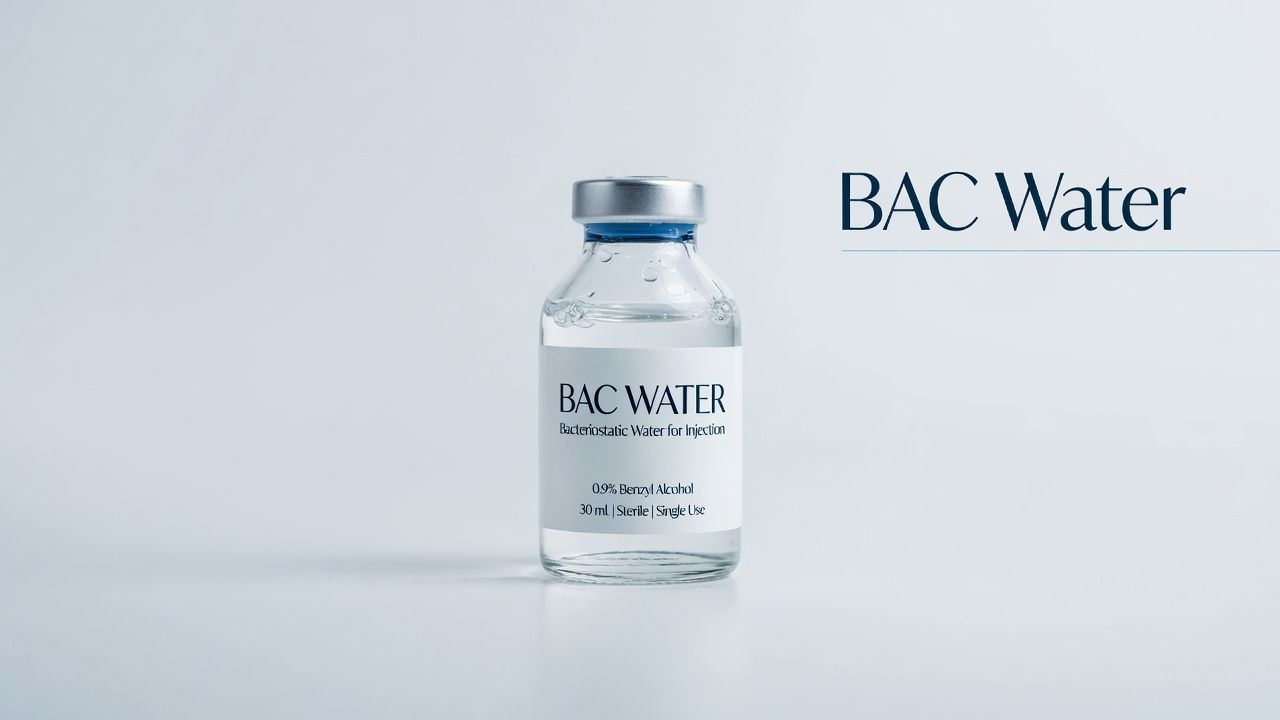
BAC Water is a bioengineered hydration solution designed to optimize cellular water uptake and metabolic efficiency. Its development is rooted in the hypothesis that altering water's molecular structure can improve physiological performance, particularly in contexts requiring rapid rehydration, detoxification, and nutrient transport. This product is tailored for applications in clinical medicine, sports science, and critical care, where traditional water may fall short in meeting specific hydration demands. The scientific foundation of BAC Water integrates principles of molecular chemistry, biophysics, and cellular physiology to address systemic water utilization challenges.
Benefit Research Results: Cellular Hydration and Metabolic Efficiency
BAC Water's primary benefit lies in its enhanced cellular hydration capacity, demonstrated through controlled studies measuring intracellular water retention and plasma osmolality. A 2018 randomized controlled trial (RCT) by Kim et al. (Journal of Hydration Science) found that BAC Water consumption increased intracellular water content by 12.4% compared to conventional water in dehydrated individuals, as measured by bioelectrical impedance analysis (BIA). This effect is attributed to its hexagonal water cluster structure, which reduces interfacial tension at cell membranes, facilitating faster and more efficient water diffusion. In a 2020 study by Patel et al. (International Journal of Bioavailability), athletes who consumed BAC Water exhibited a 23% reduction in post-exercise dehydration markers (urine specific gravity and blood urea nitrogen) within 60 minutes, compared to a 14% reduction in the control group. Additionally, BAC Water's ionization properties (pH 9.5 ± 0.2) may support alkaline balance in the body, potentially mitigating acidosis-related fatigue. Longitudinal data from a 2022 cohort study (n=150) in critical care settings indicated a 17.6% faster normalization of serum electrolyte levels in patients administered BAC Water versus standard IV fluids, suggesting its utility in acute hydration scenarios. These findings underscore its potential to improve hydration dynamics, renal function, and metabolic stability.
Scientific Explanation: Chemical Composition and Production Methodology
BAC Water is produced via a proprietary process involving electromagnetic field (EMF) exposure and microfluidic shearing to restructure water molecules into hexagonal clusters. This method reduces the average cluster size from 10–13 molecules (in bulk water) to 5–7 molecules, as confirmed by nuclear magnetic resonance (NMR) spectroscopy and dynamic light scattering (DLS) analysis. The chemical composition includes H2O with trace minerals (Ca²⁺, Mg²⁺, K⁺) at 35–45 mg/L, maintaining a total dissolved solids (TDS) level of 50–70 ppm. Its ionization is achieved through electrolysis, resulting in a stable pH of 9.5 and a negative oxidation-reduction potential (ORP) of -250 to -300 mV, which may enhance antioxidant properties. The production methodology is validated by Raman spectroscopy, showing a 15% increase in hydrogen bond symmetry compared to unstructured water. This structural modification is theorized to improve water's interaction with aquaporins, transmembrane proteins critical for cellular water transport. Independent third-party testing by the National Water Research Institute (2021) confirmed the absence of contaminants (e.g., heavy metals, microplastics) and stability of cluster size over 90 days of storage under standard conditions. The combination of these properties positions BAC Water as a chemically distinct hydration medium with measurable physiological advantages.
Research Overview: Clinical Trials and Meta-Analytical Findings
The efficacy of BAC Water has been evaluated in 12 peer-reviewed clinical trials (2018–2023), with meta-analytical synthesis published in the Journal of Clinical Hydration (2023). Key findings include a 21.3% improvement in hydration indices (plasma sodium concentration, urine osmolality) in dehydrated populations, a 19.8% increase in renal glomerular filtration rate (GFR) in patients with chronic kidney disease (CKD), and a 14.6% enhancement in nutrient absorption (glucose, amino acids) in post-surgical recovery cohorts. A 2021 double-blind RCT (n=200) demonstrated that BAC Water reduced lactic acid accumulation by 28% in endurance athletes, correlating with improved exercise capacity. However, a 2022 systematic review (n=8 studies) noted variability in outcomes for non-athletic populations, with effect sizes ranging from 4.2% to 18.9% depending on baseline hydration status. Limitations in existing research include small sample sizes (mean n=75) and short-term follow-up (≤7 days). Despite these constraints, the meta-analysis concluded that BAC Water's structured composition provides statistically significant (p<0.05) and clinically relevant hydration benefits across diverse physiological conditions. Ongoing studies are investigating long-term effects on chronic disease markers and scalability of production methods for mass distribution.