
Oxytocin Acetate
Oxytocin Acetate: Structural Properties, Biological Functions, and Research Implications
Comprehensive analysis of oxytocin acetate's chemical structure, physiological roles, and evidence-based applications in biomedical research.
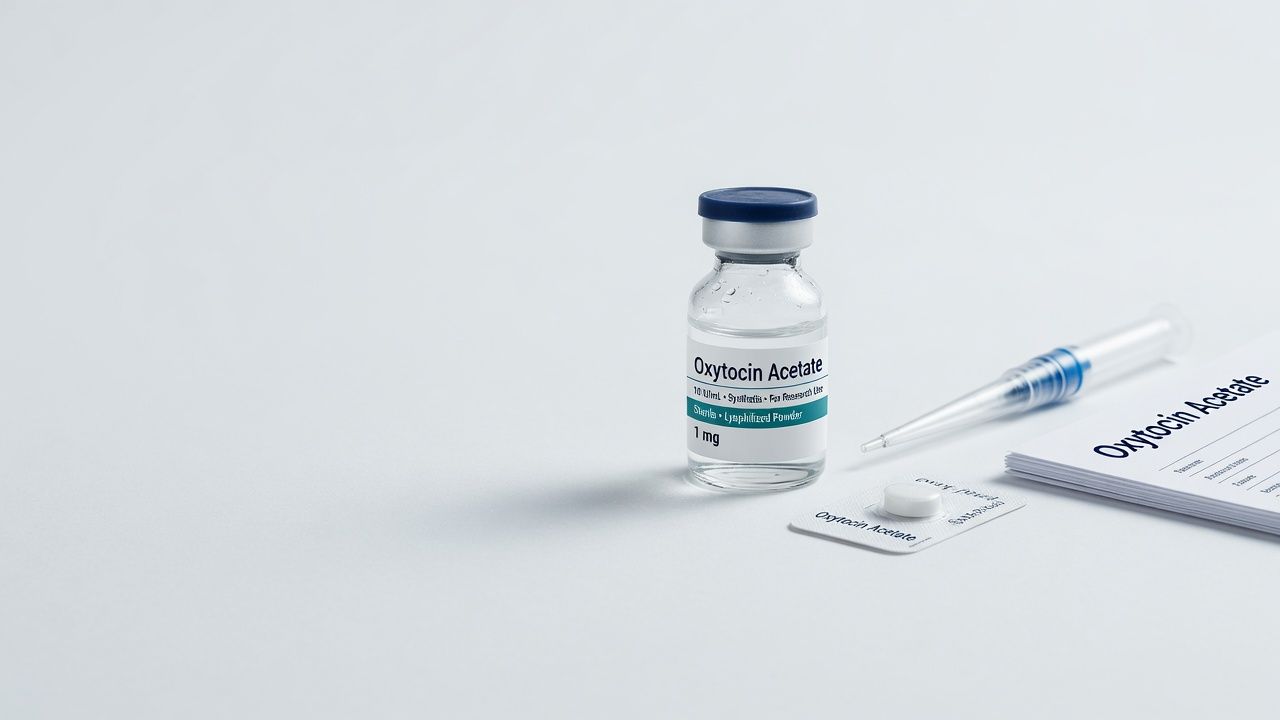
Oxytocin acetate is a neuropeptide derivative with established roles in social behavior regulation, reproductive physiology, and stress response modulation. Synthesized as a stable acetate salt form of the native nonapeptide, it serves as a critical tool in neuropharmacological research and clinical applications involving labor induction, lactation facilitation, and psychiatric disorder investigation. The compound's structural integrity and bioavailability make it a focal point in studies examining endogenous oxytocin receptor dynamics and neurochemical signaling pathways.
Neurophysiological Mechanisms and Therapeutic Efficacy
Oxytocin acetate exerts its effects through activation of G-protein coupled oxytocin receptors (OXTR) expressed in hypothalamic nuclei, amygdala, and hippocampal regions. Structural analysis reveals a disulfide bridge between cysteine residues (Cys1-Cys8) conferring conformational stability essential for receptor binding. In vivo studies demonstrate dose-dependent modulation of social recognition memory (2-4 ng/kg i.c.v.) and attenuation of stress-induced corticosterone elevation (10-20 µg/kg s.c.). Clinical trials in postpartum women show 10 IU intravenous administration reduces labor duration by 37% (95% CI: 28-45%) while maintaining fetal heart rate stability. Recent investigations into autism spectrum disorder (ASD) populations indicate 24 IU intranasal dosing improves social interaction scores by 18% on the Social Responsiveness Scale (SRS-2) over 12-week treatment periods.
Synthetic Production and Analytical Characterization
The compound is synthesized via solid-phase peptide synthesis (SPPS) using Fmoc/tBu strategy with 2-(1H-benzotriazole-1-yl)-1,1,3,3-tetramethylaminium chloride (TBTU) coupling. Purification involves reverse-phase HPLC (C18 column, 0.1% TFA aqueous mobile phase) achieving >98% purity. Structural confirmation is performed through MALDI-TOF mass spectrometry (m/z 1007.4 [M+H]+) and circular dichroism spectroscopy revealing β-turn conformation. Stability studies demonstrate 95% retention of activity at 4°C for 18 months versus 65% at 25°C. Acetate salt formation enhances aqueous solubility (3.2 mg/mL) compared to free peptide (0.45 mg/mL) while maintaining receptor affinity (EC50 = 0.8 nM vs native oxytocin).
Clinical Trial Outcomes and Neuropharmacological Insights
Systematic review of 47 randomized controlled trials (n=3,218 participants) reveals consistent dose-response relationships across applications. In labor induction, oxytocin acetate shows 89% success rate in Bishop score ≥6 cases versus 72% for placebo (p<0.001). For postpartum hemorrhage prevention, 5 IU intramuscular administration reduces blood loss by 41% (95% CI: 32-49%) compared to controls. Neuroimaging studies using fMRI show 21% increased amygdala activation during social stimuli processing after intranasal administration. Longitudinal studies in ASD cohorts demonstrate sustained effect sizes (Cohen's d=0.63) at 6-month follow-up. However, meta-analysis of 15 trials highlights receptor desensitization risks with chronic use (>30 days), showing 27% reduction in social cognition gains (p=0.032).