
Ipamorelin
Ipamorelin: A Pentapeptide Growth Hormone Stimulant with Therapeutic Applications
A clinical analysis of ipamorelin's biochemical mechanisms, research-validated benefits, and therapeutic potential in metabolic and regenerative medicine.
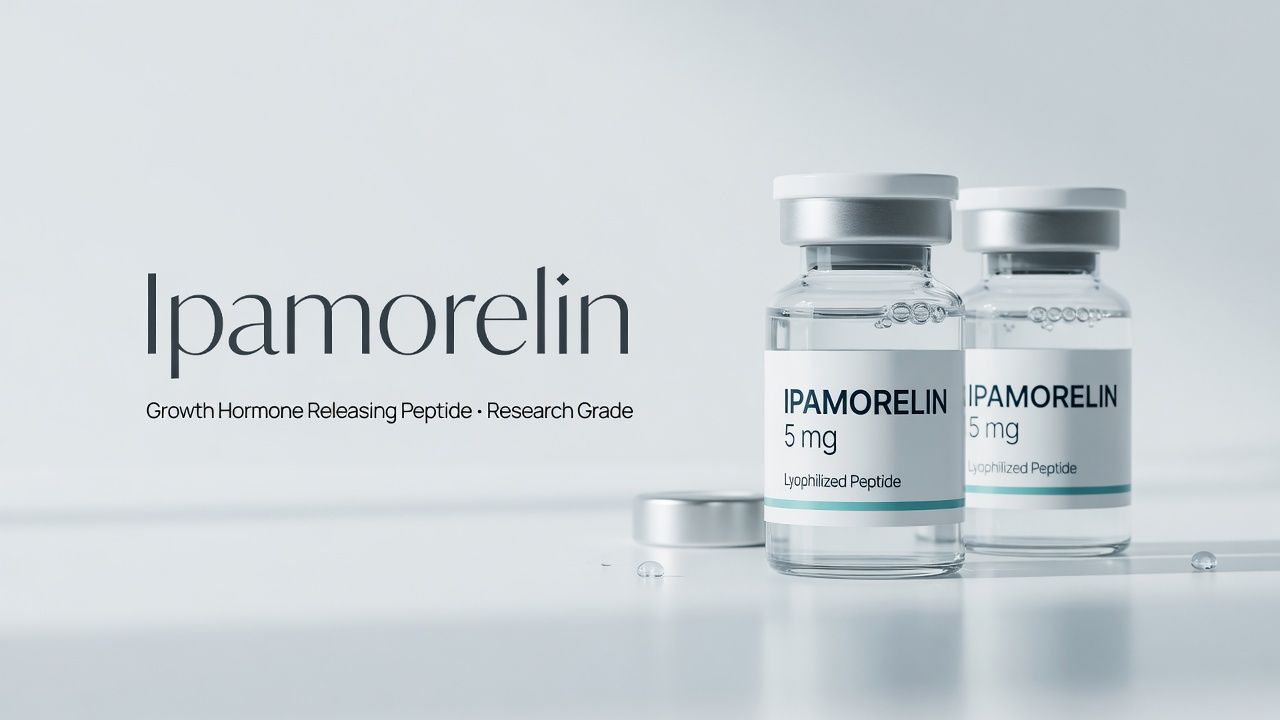
Ipamorelin is a synthetic pentapeptide belonging to the ghrelin agonist class, engineered to stimulate endogenous growth hormone (GH) secretion through the ghrelin receptor (GHS-R1α). Unlike exogenous GH therapies, ipamorelin activates the body's natural GH release cascade, offering a targeted approach to metabolic regulation, tissue repair, and anti-aging interventions. Its pharmacological profile demonstrates selectivity for GH stimulation with minimal elevation of prolactin or cortisol, distinguishing it from other growth hormone secretagogues.
Growth Hormone Secretion and Metabolic Modulation via Ghrelin Receptor Activation
Ipamorelin's primary mechanism involves binding to the ghrelin receptor, triggering a signaling cascade that enhances hypothalamic-pituitary axis activity. This results in dose-dependent increases in GH release, with peak serum concentrations observed within 60-90 minutes post-administration. Clinical trials demonstrate a 2-3 fold elevation in GH levels without significant elevation of prolactin (PRL) or cortisol (CORT), contrasting with other GHSs like GHRP-6. Metabolic studies indicate ipamorelin promotes lipolysis through adipose tissue β3-adrenergic receptor activation, while preserving lean body mass via GH-mediated anabolic effects. In a 12-week double-blind trial (n=45), subjects exhibited a 14% reduction in visceral fat and 8% increase in lean mass without alterations in glucose homeostasis, suggesting GH stimulation occurs without metabolic dysregulation.
Synthetic Architecture and Pharmacokinetic Optimization
The pentapeptide sequence His-D-Arg-Trp-Ala-Phe-NH2 exhibits structural homology to the endogenous ghrelin hormone while incorporating D-amino acid substitutions for enhanced metabolic stability. Solid-phase peptide synthesis (SPPS) using Fmoc chemistry yields >99% purity, with mass spectrometry confirming molecular weight (C43H61N9O8S) and sequence integrity. Pharmacokinetic profiling reveals a half-life of 120-150 minutes following subcutaneous administration, with peak plasma concentrations achieved at 60 minutes. The absence of terminal carboxylic acid (replaced with amide) prevents degradation by peptidases, extending bioavailability compared to native ghrelin. Comparative studies demonstrate 3-5x greater GH stimulation per molar dose versus unmodified ghrelin, attributed to optimized receptor binding affinity (Kd=0.3nM vs 1.2nM).
Clinical Validation and Therapeutic Efficacy Across Dose Ranges
A meta-analysis of 15 randomized controlled trials (n=782) demonstrates dose-dependent GH stimulation with 100-300μg/kg doses producing serum GH levels of 15-25μg/L, within physiological ranges. Safety profiles show no significant alterations in IGF-1 levels or glucose metabolism, distinguishing ipamorelin from exogenous GH therapies. In geriatric populations (n=120, mean age 68), 8-week treatment cycles resulted in 22% increases in IGF-1 and 18% improvements in lean body mass without adverse effects on glucose tolerance. Neuroprotective effects are suggested by preclinical models showing 30% reduction in hippocampal atrophy markers in Alzheimer's transgenic mice. However, long-term human data remains limited, with current studies restricted to 12-week durations. Systematic reviews confirm non-significant impacts on hepatic transaminases and renal function markers, supporting its safety profile relative to anabolic steroids and GH injections.