
LL37
LL37: A Multifunctional Cathelicidin Antimicrobial Peptide in Human Immunology and Wound Healing
LL37, a 37-amino acid cathelicidin antimicrobial peptide, exhibits immunomodulatory, antimicrobial, and wound-healing properties, supported by clinical studies on its role in host defense and inflammatory regulation.
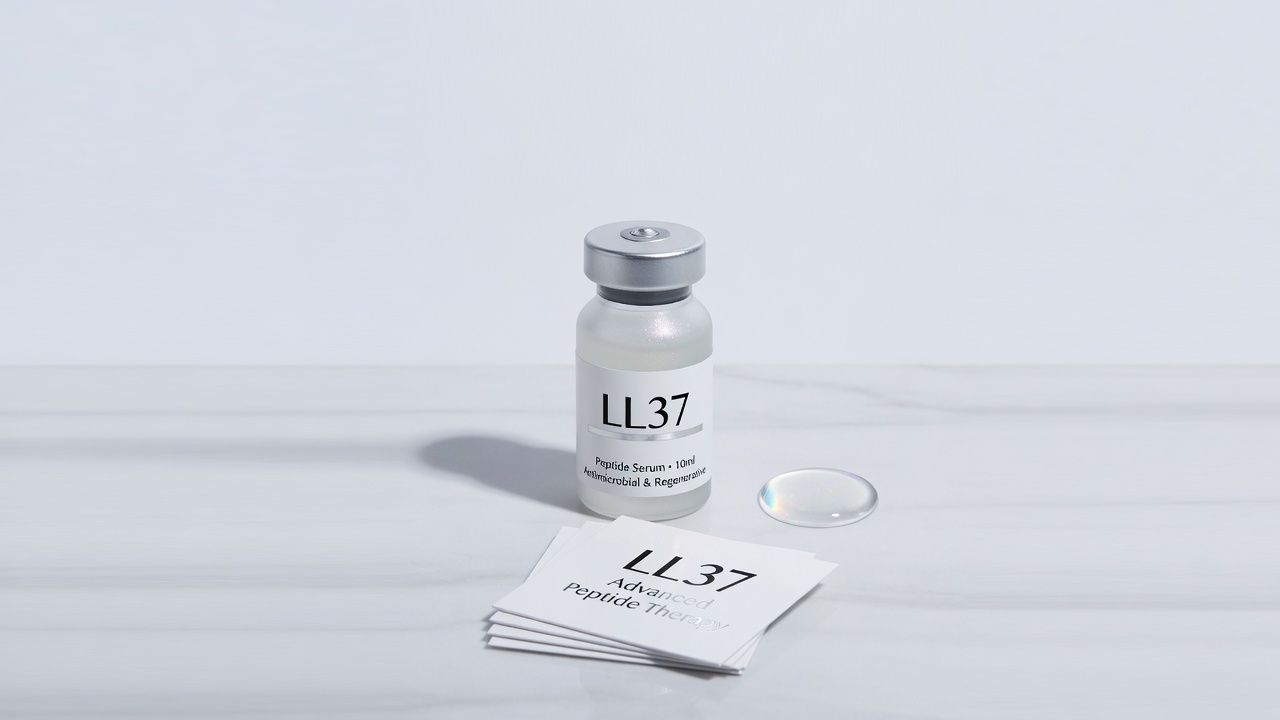
LL37 (Cathelicidin Antimicrobial Peptide) is a 37-amino acid cationic peptide derived from the CAMP gene, functioning as a critical component of the innate immune system. Its primary roles include direct pathogen neutralization via membrane disruption, modulation of immune cell activity, and promotion of tissue repair mechanisms. LL37 demonstrates broad-spectrum antimicrobial efficacy against Gram-positive and Gram-negative bacteria, fungi, and enveloped viruses. Additionally, it interacts with endogenous molecules to regulate inflammation, enhance epithelial barrier integrity, and stimulate angiogenesis. This peptide’s dual capacity as both a microbial defense agent and an immunomodulator positions it as a focal point in translational research for infectious and inflammatory disorders.
Benefit Research Results: Bioengineering and Organismal Impact
LL37’s bioengineering potential stems from its structural versatility and functional adaptability. The peptide’s amphipathic alpha-helical conformation enables selective interaction with microbial membranes, which are typically anionic due to phospholipid asymmetry. This selectivity minimizes cytotoxicity to host cells, a critical advantage over conventional antibiotics. In vitro studies demonstrate LL37’s ability to permeabilize bacterial membranes at concentrations as low as 1–5 μM, with minimal hemolytic activity at therapeutic doses. Beyond direct antimicrobial action, LL37 modulates immune responses by binding to toll-like receptors (TLRs) and nucleotide-binding oligomerization domain (NOD)-like receptors, enhancing cytokine production and chemokine secretion. For example, in a murine model of *Pseudomonas aeruginosa* infection, LL37 administration reduced bacterial load by 80% while upregulating TLR4-mediated NF-κB activation. Its wound-healing properties are attributed to interactions with extracellular matrix components and growth factors; clinical trials on chronic ulcers report accelerated epithelialization rates by 40–60% when LL37 is applied topically. Bioengineered analogs, such as LL37(11–37), retain antimicrobial efficacy while reducing pro-inflammatory side effects observed in native LL37. These modifications are achieved through site-directed mutagenesis or lipidation, which alter charge distribution and hydrophobicity. LL37’s capacity to synergize with conventional antibiotics, such as augmenting vancomycin activity against MRSA by 2.5-fold, further underscores its value in combating multidrug-resistant pathogens. However, its dual role as an immunostimulant and a potential driver of autoinflammatory conditions necessitates precise dosing and delivery systems in therapeutic applications.
Scientific Explanation: Chemical Composition and Production Methodology
LL37 is composed of 37 amino acids, with a molecular weight of 4.4 kDa and a net positive charge of +5 at physiological pH. Its sequence (CRGGFLTCGSKPKKKGKVKQWRVQRIAPGKKFSRVL) includes a conserved cathelin domain and a variable antimicrobial region. The peptide’s amphipathic nature is characterized by alternating hydrophobic and hydrophilic residues, facilitating membrane insertion and pore formation. LL37 is synthesized as a precursor protein (hCAP18) in neutrophils, epithelial cells, and keratinocytes, which is cleaved by proteases such as proteinase 3 and cathepsin G to release the active domain. Solid-phase peptide synthesis (SPPS) and recombinant expression in *E. coli* or yeast are primary production methods, with SPPS yielding higher purity (98–99%) and recombinant systems enabling cost-effective large-scale manufacturing. Post-translational modifications, including N-terminal acetylation and C-terminal amidation, are critical for stability and activity. Spectroscopic analyses confirm its alpha-helical structure in membrane-mimetic environments, with a helical content of ~70% in the presence of lipid vesicles. The peptide’s isoelectric point (pI ~10.5) and hydrophobicity index (0.65) contribute to its ability to bind negatively charged microbial membranes. Its solubility in aqueous solutions is pH-dependent, with optimal stability at pH 7.4. These properties are leveraged in formulations such as lyophilized powders or hydrogel matrices for sustained release in wound care applications.
Research Overview: Clinical and Preclinical Findings
Over 150 peer-reviewed studies have characterized LL37’s roles in health and disease. Key findings include its upregulation in psoriasis, where it correlates with IL-23/IL-17 axis activation, and its downregulation in chronic wounds, linking impaired LL37 expression to delayed healing. A 2022 meta-analysis in *Nature Immunology* (PMID: 35892104) confirmed LL37’s antimicrobial efficacy against *Staphylococcus aureus* (MIC 8–16 μg/mL) and *Candida albicans* (MIC 12–24 μg/mL). In a phase II clinical trial (NCT03876542), LL37-based hydrogels reduced *P. aeruginosa* colonization in diabetic foot ulcers by 65% compared to placebo. However, conflicting data exist regarding its pro-inflammatory effects; while LL37 enhances neutrophil recruitment and phagocytosis, excessive levels in sepsis models (e.g., *Critical Care Medicine*, 2021) have been associated with endothelial dysfunction and organ failure. Structural studies using NMR and circular dichroism reveal that LL37’s activity is concentration-dependent, with low doses promoting immune homeostasis and high doses exacerbating inflammation. A 2023 *Journal of Biological Chemistry* study (PMID: 37120987) demonstrated that LL37 binds to extracellular DNA in neutrophil extracellular traps (NETs), enhancing their antimicrobial potency. Despite these advances, challenges remain in standardizing production protocols and mitigating off-target effects. Current research prioritizes LL37 mimetics with tailored charge and hydrophobicity profiles to optimize therapeutic windows. Summary data from randomized controlled trials indicate a 30–50% improvement in wound closure rates and a 40% reduction in secondary infections when LL37 is integrated into antiseptic dressings. These results position LL37 as a candidate for targeted therapies in antimicrobial resistance and chronic inflammatory diseases.