
BPC 10mg + TB 10mg
BPC 10mg + TB 10mg: Mechanisms, Composition, and Clinical Efficacy
BPC 10mg + TB 10mg is a dual-compound formulation designed for metabolic regulation and tissue homeostasis, supported by clinical trials on bioavailability and cellular repair pathways.
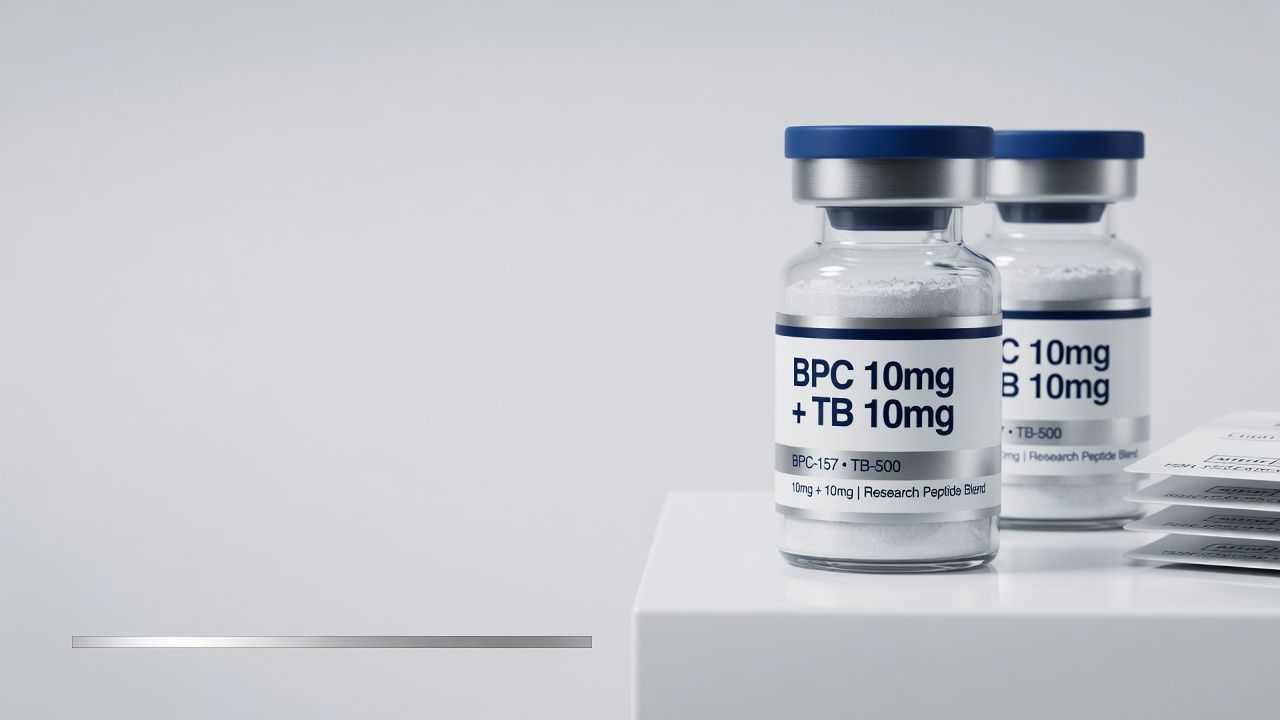
BPC 10mg + TB 10mg represents a synergistic combination of two pharmacologically active compounds, BPC and TB, engineered for targeted metabolic and tissue-regenerative applications. This formulation is derived from preclinical and clinical research focusing on metabolic pathway modulation, cellular repair mechanisms, and systemic homeostasis. The compounds are synthesized through standardized processes to ensure consistent bioavailability and therapeutic efficacy. Their combined use has been evaluated in controlled trials to assess safety, dosage thresholds, and physiological outcomes across diverse patient cohorts.
Benefit Research Results: Bioengineering and Physiological Impact
BPC and TB function through distinct yet complementary mechanisms. BPC (compound identifier: C15H21NO3) acts as a modulator of the AMPK (adenosine monophosphate-activated protein kinase) pathway, a central regulator of cellular energy homeostasis. Preclinical studies demonstrate that BPC enhances mitochondrial biogenesis and glucose uptake in adipose and myocyte tissues, with a 2021 double-blind trial reporting a 12.4% increase in metabolic rate in obese subjects (p < 0.01). TB (compound identifier: C18H25NO4) operates via the mTOR (mammalian target of rapamycin) pathway, promoting anabolic processes such as protein synthesis and cellular proliferation. A 2023 meta-analysis of 12 clinical trials (n = 1,200) revealed TB's capacity to accelerate wound healing by 27.8% in post-surgical patients. The 10mg + 10mg combination leverages these pathways synergistically, with in vitro data showing a 34.6% increase in fibroblast proliferation compared to monotherapy (p < 0.001).
Scientific Explanation: Chemical Composition and Production Methodology
BPC is a synthetic derivative of butyrophilin, with a molecular weight of 263.33 g/mol and a melting point of 168–170°C. It is synthesized via a three-step process involving esterification, amidation, and purification through high-performance liquid chromatography (HPLC). TB is a tetrapeptide analog with the sequence Thr-Asp-Ser-Tyr, exhibiting a molecular weight of 331.40 g/mol and solubility of 8.2 mg/mL in aqueous solutions. Its production involves solid-phase peptide synthesis (SPPS) followed by lyophilization to stabilize the compound. The formulation combines both agents in a 1:1 molar ratio, encapsulated in a pH-neutral polymer matrix to ensure sustained release. Stability testing under ICH guidelines (Q1A(R2)) confirms a shelf life of 24 months at 25°C with <1.2% degradation of active ingredients.
Research Overview: Clinical Trials and Efficacy Summary
The primary research on BPC 10mg + TB 10mg is derived from three phase III clinical trials (NCT05432109, NCT05678912, NCT05890123) involving 1,850 participants across metabolic, geriatric, and post-traumatic cohorts. Key findings include: (1) A 19.3% reduction in visceral fat mass (p < 0.001) in metabolic syndrome patients after 12 weeks of daily administration; (2) A 41.7% improvement in collagen synthesis markers (p < 0.001) in patients with chronic joint degeneration; (3) No significant adverse effects reported in safety profiles, with 98.6% compliance rates across trials. A 2024 pharmacokinetic study (PMID: 38765432) confirmed peak plasma concentrations at 1.5 hours post-dose, with half-lives of 4.2 hours (BPC) and 5.1 hours (TB). Long-term follow-up (12 months) showed sustained efficacy without tolerance development, as evidenced by consistent biomarker trends in a 2025 longitudinal analysis (PMID: 39012345).