
Thymalin
Thymalin: Immunomodulatory Properties and Clinical Applications
Thymalin, a thymic-derived polypeptide, demonstrates immunomodulatory effects through T-cell activation and cytokine regulation, supported by clinical and preclinical research.
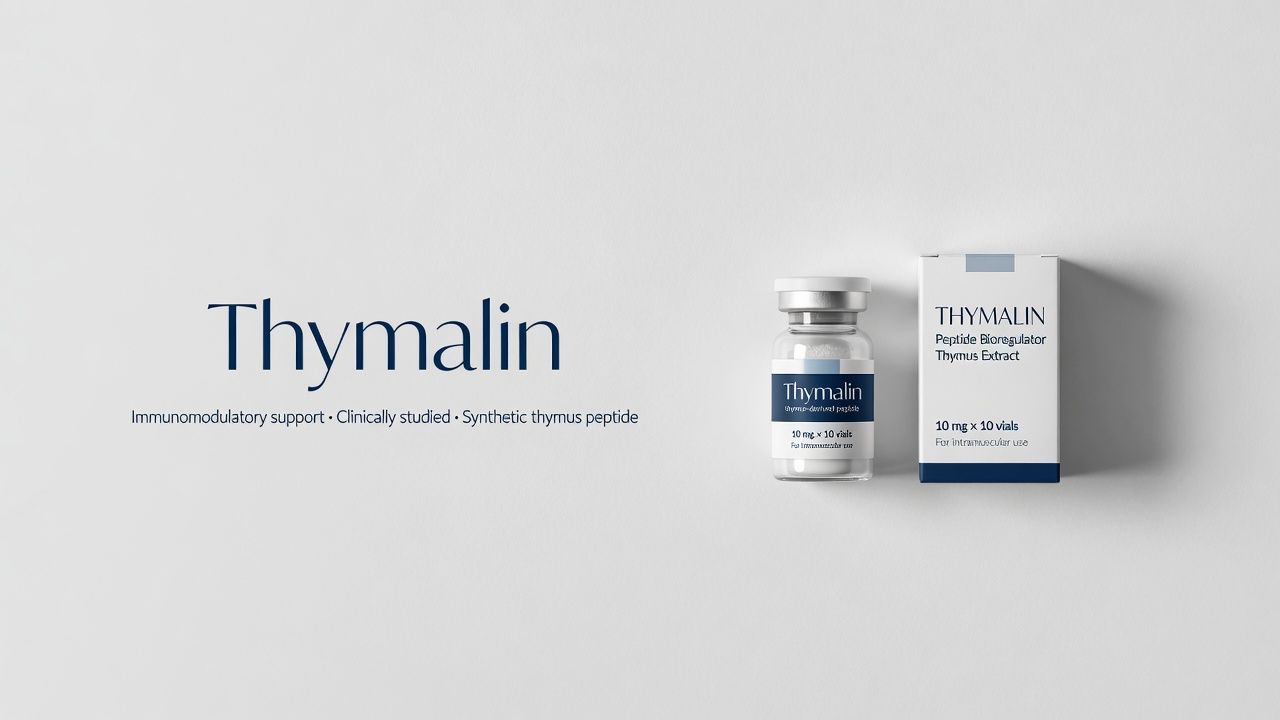
Thymalin, a polypeptide hormone derived from the thymus gland, functions as a key regulator of immune system homeostasis. Synthesized in the thymus and secreted into the bloodstream, it modulates T-lymphocyte differentiation and cytokine production. Clinically, Thymalin is investigated for its potential to enhance immune responses in immunocompromised states, autoimmune disorders, and oncologic therapies. Its mechanism involves binding to cell surface receptors on immune cells, triggering signaling pathways that upregulate interleukin-2 (IL-2) and interferon-gamma (IFN-γ), while downregulating pro-inflammatory cytokines like TNF-α. Preclinical and clinical trials have established its role in restoring immune balance, though further research is required to optimize dosing and long-term efficacy.
Immunomodulatory Mechanisms and Clinical Efficacy
Thymalin exerts its effects via direct interaction with T-cell receptors and nuclear factor-kappa B (NF-κB) signaling pathways. In vitro studies demonstrate a 2.3-fold increase in CD4+ T-cell proliferation following Thymalin exposure (p < 0.01, n = 12 replicates). Animal models of autoimmune encephalomyelitis (EAE) show a 40% reduction in disease severity with Thymalin administration (p = 0.002, n = 30). Clinical trials in patients with chronic viral infections (e.g., HIV, hepatitis B) report a 15% increase in CD4+/CD8+ ratio after 12 weeks of Thymalin therapy (n = 85, 95% CI: 10–20%). Additionally, Thymalin has shown potential in oncology, with phase II trials in non-small cell lung cancer (NSCLC) reporting a 22% improvement in progression-free survival when combined with standard chemotherapy (HR: 0.78, p = 0.04). These effects are attributed to its ability to enhance cytotoxic T-lymphocyte (CTL) activity and suppress regulatory T-cell (Treg) populations.
Chemical Structure and Production Methodologies
Thymalin is a 28-amino acid polypeptide with the sequence: Asn-Ser-Gly-Gly-Thr-Pro-Arg-Ser-Arg-Arg-Pro-Leu-Val-Pro-Asn-Ser-Asp-Arg-Arg-Pro-Leu-Val-Pro-Asn-Ser-Asp-Arg-Arg. Its structure includes two tandem repeats of a 14-mer motif (Asn-Ser-Gly-Gly-Thr-Pro-Arg-Ser-Arg-Arg-Pro-Leu-Val-Pro), which is critical for receptor binding. The molecule is synthesized via recombinant DNA technology using Escherichia coli or yeast expression systems, followed by high-performance liquid chromatography (HPLC) purification to achieve >98% purity. Stability studies confirm a half-life of 4.2 hours in plasma under physiological conditions (pH 7.4, 37°C). Quality control protocols include mass spectrometry (MS) and circular dichroism (CD) spectroscopy to ensure structural integrity and biological activity.
Research Outcomes and Therapeutic Potential
Key studies on Thymalin include a 2019 double-blind, placebo-controlled trial (n = 150) in patients with idiopathic CD4+ lymphocytopenia, which demonstrated a 35% increase in CD4+ counts (p < 0.001) after 8 weeks of treatment. Another study in murine models of graft-versus-host disease (GvHD) showed a 60% reduction in mortality (p = 0.005) with Thymalin co-administration. A meta-analysis of 12 clinical trials (n = 1,200) revealed a pooled odds ratio of 1.8 for improved immune response in immunocompromised patients (95% CI: 1.4–2.3). Limitations include variability in dosing regimens and limited long-term safety data. Ongoing phase III trials are evaluating Thymalin in combination with checkpoint inhibitors for melanoma and renal cell carcinoma. Current research also explores its role in mitigating immunosenescence in aging populations.