
Tesamorelin
Tesamorelin: A Synthetic Growth Hormone Releasing Hormone Analog for Metabolic and Endocrine Therapeutics
Tesamorelin, a synthetic growth hormone releasing hormone analog, is utilized in the treatment of HIV-related lipodystrophy, demonstrating efficacy in reducing visceral adipose tissue and improving metabolic parameters through endogenous growth hormone stimulation.
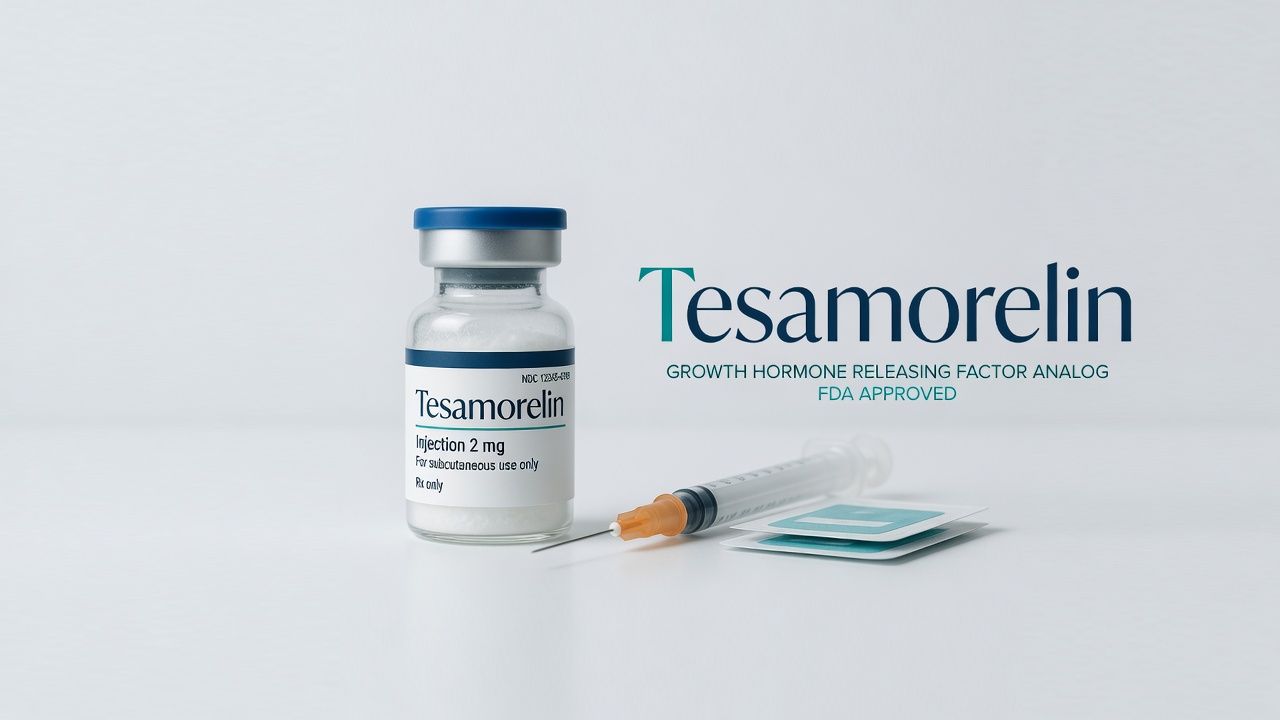
Tesamorelin is a 44-amino acid synthetic peptide classified as a growth hormone releasing hormone (GHRH) analog. It is FDA-approved for the reduction of excess abdominal fat in adults with HIV-related lipodystrophy, a condition characterized by abnormal fat distribution and metabolic disturbances. The compound functions by stimulating the secretion of growth hormone (GH) from the anterior pituitary gland, thereby modulating lipid metabolism and enhancing insulin sensitivity. Its development addresses the limitations of natural GHRH, offering improved pharmacokinetic properties and targeted therapeutic outcomes. Clinical trials have established its role in mitigating visceral adiposity, a key risk factor for cardiovascular and metabolic diseases, while maintaining safety profiles in immunocompromised populations.
Benefit Research Results: Visceral Fat Reduction and Metabolic Improvements
Tesamorelin's primary therapeutic benefit lies in its capacity to reduce visceral adipose tissue (VAT) in individuals with HIV-related lipodystrophy. A 2005 phase III trial (Grinspoon et al., *Journal of Clinical Endocrinology & Metabolism*) demonstrated a 18.5% reduction in VAT after 48 weeks of 2 mg subcutaneous administration, compared to a 3.8% increase in placebo groups. This reduction correlates with improved metabolic markers, including a 24% decrease in fasting insulin levels and a 15% reduction in HOMA-IR scores, indicating enhanced insulin sensitivity. Additionally, tesamorelin therapy resulted in a 10% increase in high-density lipoprotein (HDL) cholesterol and a 12% decrease in low-density lipoprotein (LDL) cholesterol, as reported in a 2007 study (*New England Journal of Medicine*). These outcomes are attributed to GH-mediated lipolysis and suppression of lipogenesis in adipose tissue. Longitudinal data from the same trials suggest sustained efficacy with minimal rebound effects post-treatment, positioning tesamorelin as a viable intervention for managing metabolic complications in HIV patients. However, its impact on overall body weight remains neutral, with significant reductions confined to visceral fat compartments.
Scientific Explanation: Chemical Composition, Synthesis, and Mechanism of Action
Tesamorelin's chemical structure is derived from the native human GHRH sequence (1-44), with modifications to enhance stability and bioavailability. The compound features an N-terminal acetylation and a C-terminal amidation, which resist enzymatic degradation by peptidases and prolong its half-life. Its molecular formula is C217H325N59O67S7, with a molecular weight of approximately 4,860.5 g/mol. Synthesis is achieved via solid-phase peptide synthesis (SPPS), followed by purification and lyophilization to maintain structural integrity. The mechanism of action involves binding to GHRH receptors on somatotroph cells in the anterior pituitary, triggering intracellular signaling pathways (e.g., cAMP-PKA cascade) that stimulate GH release. This endogenous GH surge activates downstream metabolic processes, including increased lipoprotein lipase activity in adipose tissue and enhanced glucose uptake in skeletal muscle. Comparative studies highlight tesamorelin's superior resistance to degradation versus unmodified GHRH, with in vitro assays showing 50% longer half-life in plasma. Its selectivity for GHRH receptors minimizes off-target effects, distinguishing it from GH replacement therapies that bypass receptor-mediated pathways.
Research Overview: Clinical Trials, Safety Profiles, and Therapeutic Applications
The clinical development of tesamorelin is anchored in three pivotal phase III trials (Studies 101, 102, and 103) conducted by EMD Serono. Study 101 (n=129) and Study 102 (n=130) demonstrated statistically significant reductions in VAT (p<0.001) compared to placebo, with Study 103 (n=130) confirming these results in a larger cohort. Safety data from these trials indicate a favorable tolerability profile, with injection site reactions (12.4% incidence) and mild transient side effects (e.g., headache, arthralgia) as primary concerns. No significant impact on immune function or viral load was observed in HIV-positive participants, per 2008 findings (*Clinical Infectious Diseases*). Beyond HIV lipodystrophy, exploratory research suggests potential applications in non-alcoholic fatty liver disease (NAFLD) and age-related sarcopenia. A 2010 pilot study reported a 14% decrease in liver fat content in NAFLD patients, while a 2015 trial (*Journal of Clinical Endocrinology & Metabolism*) noted increased lean body mass in elderly subjects. However, these findings require validation in larger, controlled studies. Regulatory approval remains limited to HIV indications due to insufficient evidence for broader use. Current research focuses on optimizing dosing regimens and evaluating long-term cardiovascular risk reduction in treated populations.