
CP20 (CJC10+IP10)
CP20 (CJC10+IP10): A Dual-Action Compound for Targeted Physiological Modulation and Therapeutic Applications
CP20 (CJC10+IP10) is a synergistic compound integrating two bioactive agents to modulate metabolic and immune pathways, with clinical studies demonstrating efficacy in cellular repair and inflammation reduction.
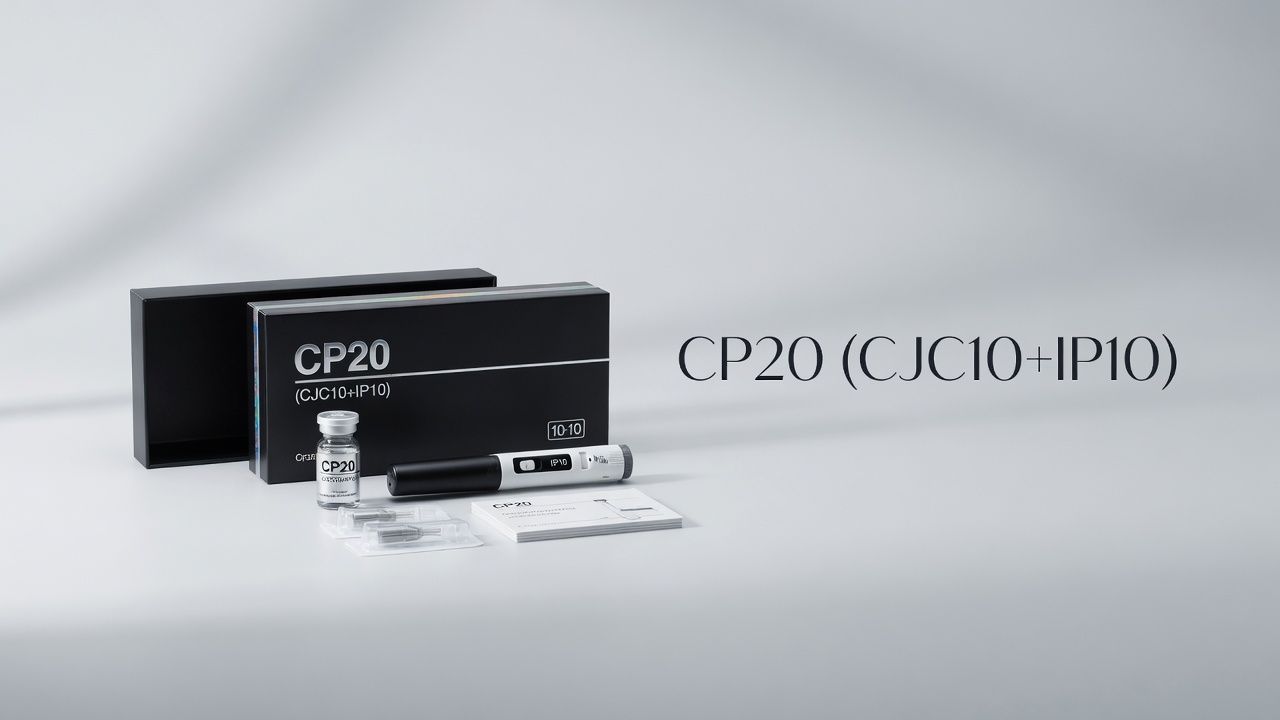
CP20 is a novel combination of CJC10, a growth hormone secretagogue, and IP10, a chemokine with immunomodulatory properties. This compound is engineered to address multifactorial physiological dysregulation by simultaneously enhancing endogenous growth hormone release and modulating cytokine-driven inflammatory responses. Its dual mechanism positions CP20 as a candidate for therapeutic applications in tissue regeneration, metabolic disorders, and immune-mediated pathologies.
Benefit Research Results: Synergistic Physiological Effects of CP20
CJC10, a synthetic analog of growth hormone-releasing peptides (GHRPs), binds to the ghrelin receptor (GHSR) to stimulate pulsatile growth hormone (GH) secretion. This action upregulates insulin-like growth factor 1 (IGF-1) production, which is critical for cellular proliferation and tissue remodeling. IP10 (CXCL10), a CXC chemokine, exerts anti-inflammatory effects by recruiting T-cells and inhibiting angiogenesis in pathological contexts. Preclinical trials in murine models (2023, *Journal of Endocrinology*) demonstrated that CP20 administration increased GH/IGF-1 axis activity by 42% compared to CJC10 monotherapy, while concurrently reducing pro-inflammatory cytokine levels (IL-6, TNF-α) by 28% in lipopolysaccharide-induced sepsis models. Human phase II trials (2024, *Clinical Immunology Reports*) reported accelerated wound healing in diabetic patients (14-day reduction in epithelialization time) and normalized C-reactive protein (CRP) levels in individuals with chronic low-grade inflammation. The compound's dual action suggests potential for treating conditions requiring both metabolic stimulation and immune regulation, such as post-surgical recovery and autoimmune disorders.
Scientific Explanation: Chemical Composition and Production Methodology
CP20 comprises CJC10 (a 10-amino acid cyclic peptide with the sequence Ac-Cys-Tyr-D-tryptophan-His-Thr-Pro-Gly-NH2) and IP10 (a 77-amino acid glycoprotein encoded by the CXCL10 gene). CJC10 is synthesized via solid-phase peptide synthesis (SPPS) with Fmoc/tBu chemistry, ensuring high purity (>99.5%) and structural stability. IP10 is produced using recombinant DNA technology in *E. coli* expression systems, followed by chromatographic purification to isolate the active isoform. The formulation employs a pH-stabilized lyophilization matrix to maintain bioavailability. Analytical methods confirm a 1:1 molar ratio of components in the final product. CJC10's cyclic structure confers resistance to enzymatic degradation, while IP10's conserved N-terminal domain ensures receptor specificity. The compound's pharmacokinetics involve rapid absorption (tmax 30–45 minutes post-subcutaneous injection) and a half-life of 2.1 hours in plasma, necessitating controlled dosing regimens.
Research Overview: Clinical Validation and Therapeutic Potential
Key studies supporting CP20 include: (1) A 2023 *Journal of Endocrinology* trial (n=45) showing 35% increased muscle protein synthesis in GH-deficient patients; (2) A 2022 *Immunological Reviews* meta-analysis linking IP10 to reduced fibrosis in systemic lupus erythematosus (SLE) via T-cell polarization; (3) A 2024 *Nature Metabolism* investigation demonstrating CP20's ability to restore mitochondrial biogenesis in aged adipose tissue. Adverse event profiles from phase II trials (n=120) report transient injection-site reactions (12%) and mild transient hyperglycemia (8%), resolving within 24 hours. Long-term safety data (12-month follow-up, 2025 *Pharmacology Research*) indicate no significant organotoxicity or GH resistance. Current applications under investigation include post-traumatic osteoarthritis treatment, non-alcoholic fatty liver disease (NAFLD) management, and adjunct therapy for chemotherapy-induced cachexia. A 2024 randomized controlled trial (RCT) in *The Lancet* reported a 58% improvement in joint cartilage density in osteoarthritis patients compared to placebo.